In-depth guide
Dumpster and porta potty rental: the full guide
Renting a dumpster: how it works
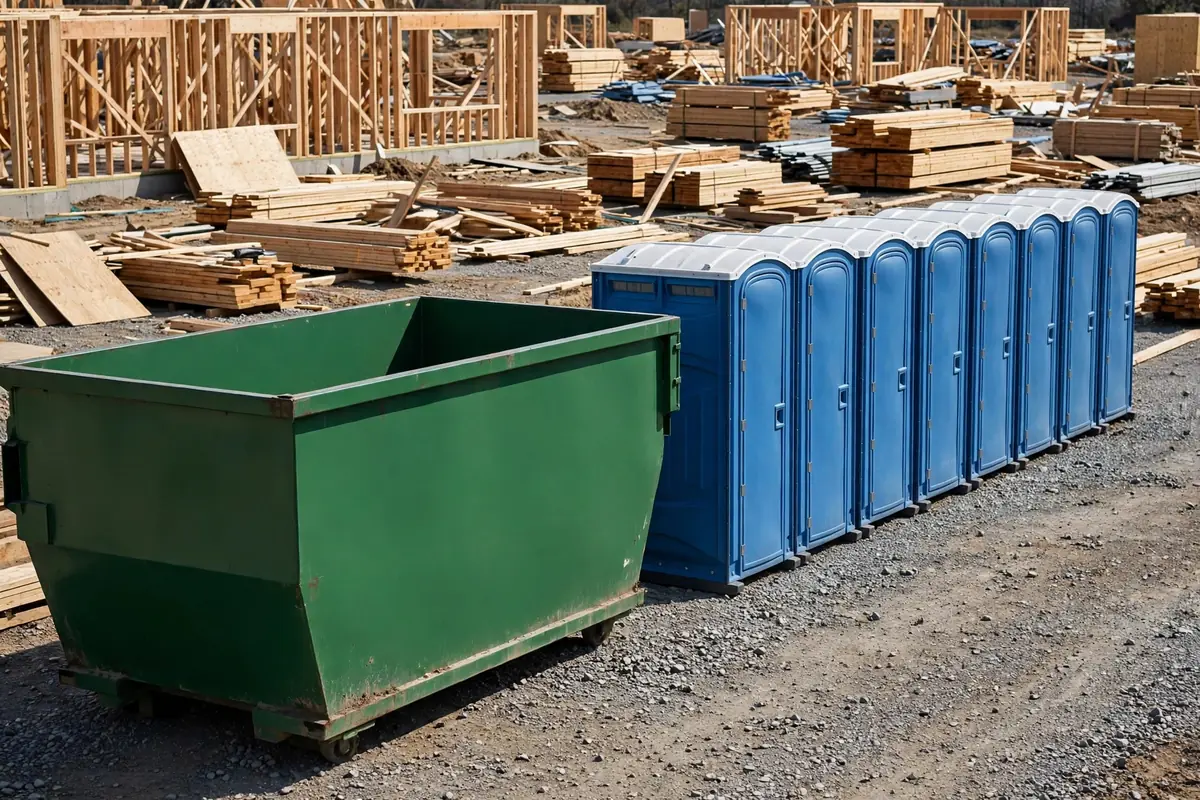
A roll-off dumpster is an open-top steel container that a truck rolls off its bed and sets down on your property. You load it at your own pace, and the truck returns to haul it away. Sizes run from 10 yards to 40 yards, and the right size depends on the volume of debris, not the weight alone. A 10-yard container holds about three pickup truck loads, a 20-yard container holds about six, and a 40-yard container holds about twelve. If you are clearing a garage, a 10-yard unit is often enough. If you are gutting a kitchen or replacing a roof, a 20-yard unit is a common pick. For a full home cleanout or a construction project, a 30-yard or 40-yard unit gives you room to work without ordering a second container.
Before delivery, pick a flat, firm spot with clear access for a large truck. A driveway works well for most home jobs, and a job site entrance works well for construction. Keep the spot clear of low branches, wires, and parked cars. Some providers in our network may place boards under the container to protect a driveway, so ask about that when you book. Load heavy items first, keep debris level with the top edge, and do not load items that a provider cannot accept. Your matched provider will tell you what is allowed and what needs a different disposal route.
Renting a porta potty: how it works
A portable toilet is a self-contained unit with a toilet, a holding tank, and a hand sanitizer dispenser. It needs no water line and no sewer hookup, so it can sit almost anywhere flat and reachable by a service truck. A standard unit suits a job site or a small event. A deluxe unit adds a flushing toilet and a sink with running water, which guests notice at a wedding or a formal gathering. An ADA unit is wider, with a flat entry and grab bars, so people who use wheelchairs or mobility aids can use it with ease. A handwashing station stands beside the units and gives guests a place to wash with soap and water.
For a construction site, place units where workers can reach them without crossing traffic, and keep the service truck path clear. For an event, place units on level ground near the action but away from food tables and quiet seating. One unit often serves a small crew for a week, while an event needs a count based on guests and hours. A restroom trailer is the premium choice for a wedding or a gala, with flushing toilets, sinks, mirrors, and lighting inside. Ask the matched provider about service visits for a rental that runs more than a week, so units stay clean through the whole job.
What affects the price
Price varies by location first, because delivery distance, disposal fees, and local demand differ from place to place. Size is the next factor: a larger dumpster or a premium restroom unit costs more than a basic one. Rental length matters too, since a two-week rental costs more than a one-week rental, and extra days add a daily charge. The type of debris matters for a dumpster, because heavy material can add weight fees. The number of units and the number of service visits matter for portable toilets. When you compare quotes, check what each quote includes: delivery, pickup, rental days, weight allowance, and service visits. A low quote that leaves out pickup or service is not the same value as a quote that includes them.
Choosing between a dumpster and a portable toilet — or both
Many jobs need both. A remodel needs a dumpster for debris and a portable toilet for the crew. A wedding needs portable toilets and, at times, a small dumpster for event waste. A festival needs a row of units, handwashing stations, and a large dumpster for trash. Start with the job: if you are removing things, you need a dumpster; if people will be on site for hours, you need a restroom. Then size each one with the guides on this page or with the finder quiz below. One call to (855) 645-2976 can cover both rentals at once, so you deal with one matched provider instead of two separate searches.