
Dumpster Rental
40-Yard Dumpster Rental
A 40-yard dumpster rental gives you the largest roll-off container for a whole-house cleanout, an interior demolition, or a large construction project that runs for weeks: furniture from every room of an estate cleanout, or drywall, wood, metal, and fixtures stripped from a building, all in one box on the jobsite. It holds about 40 cubic yards of debris, roughly twelve pickup truck loads. Call (855) 645-2976 for a free quote from a local provider.
What Is a 40-Yard Dumpster?
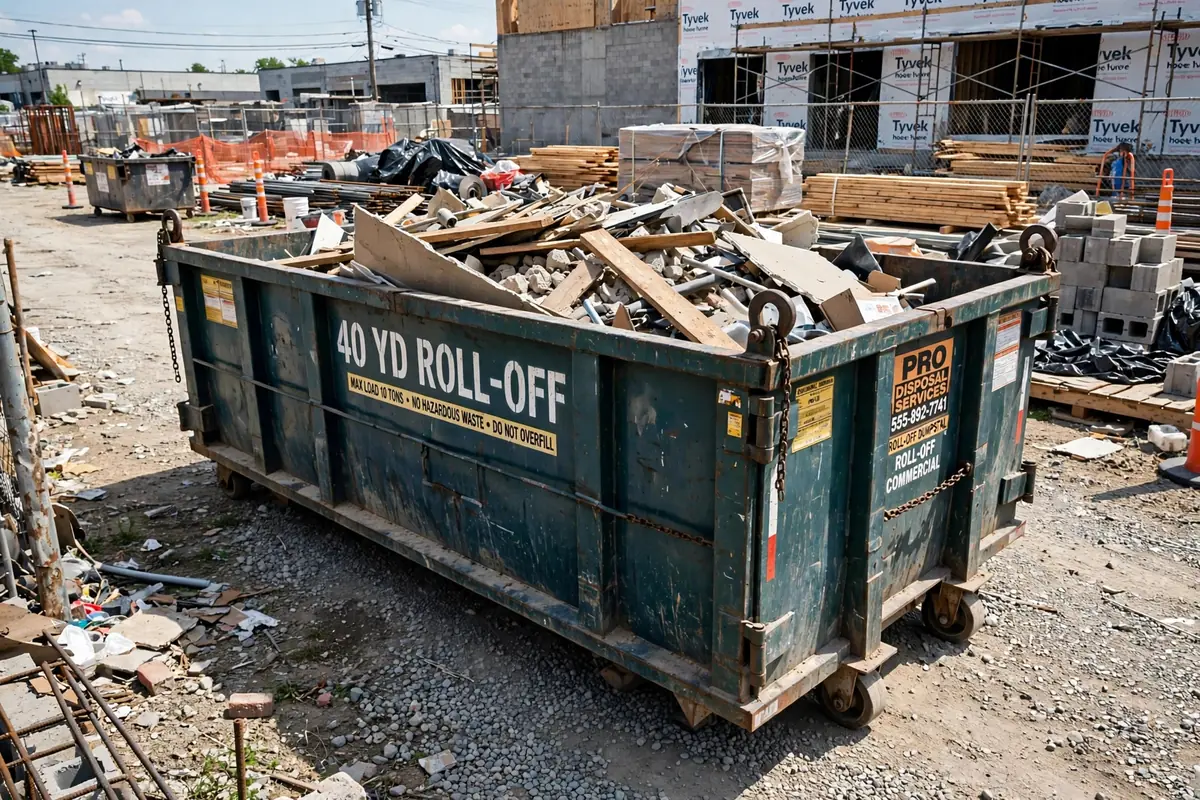
A 40-yard dumpster is the largest roll-off container in most provider fleets, built for jobs that run for weeks and produce debris every day, and two jobs show what it is for better than any other: a whole-house cleanout after an estate sale, and an interior demolition that strips a building room by room. It holds about 40 cubic yards of material, roughly twelve pickup truck loads, and it is the size site managers choose when smaller containers would need swapping every day. The container is tall, with a rear door in many models that opens so debris can be walked in, and a truck delivers it, sets it in place, and hauls it away when you call. For a rental quotes request on a commercial job, the 40-yard container is the size that keeps a large site clear, because it takes the whole building in one stream instead of a series of small loads.
The 40-yard container is different from every smaller size because it is made for scale and for time. An estate cleanout means furniture from every room, mattresses, boxes from decades of belongings, and the contents of a garage and a basement, all leaving the same house over days of sorting. An interior demolition means drywall, wood, metal, flooring, and fixtures coming out of unit after unit, or floor after floor, with the crew producing debris from morning to evening. A 30-yard box would fill and need a swap while the crew is still working, and a 20-yard box would not last the morning. Because the container is large, it needs a clear and level site with plenty of room for the delivery truck to set it down and to return for pickup, and it is usually placed on a jobsite pad, a parking lot, or a commercial lot rather than a residential driveway. The weight allowance is the highest in the fleet, but the volume is the main reason to choose it: a crew can work for days without the container filling up, and a cleanout can run room by room without stopping for a truck.
What a 40-Yard Dumpster Rental Involves
A 40-yard rental starts with a description of your job: the building being demolished or cleaned out, how many rooms or units are involved, the type of debris, the volume you expect, where the container will sit, and how long you need it. Tell the provider whether it is a whole-house cleanout, an interior demolition, a retail fit-out, or a new commercial build, since each one loads differently and runs on a different schedule. The provider quotes a price that usually covers delivery, a rental period of about a week, a set weight allowance, and pickup, and for a long job the rental can be extended or set on a swap schedule. On delivery day, the truck sets the container on a firm and level surface, and checks that the placement leaves room for the crew, for equipment, and for the truck to return. You load the container as the job goes on, keeping debris below the top edge and keeping banned items out, and you call for pickup or a swap when it is full. For a demolition, tell the provider what materials are involved, since some need separate handling.
On a whole-house cleanout, the loading follows the sorting: room by room, with furniture and mattresses going in first, since they are the bulkiest pieces, and boxes and loose belongings filling the space around them.
An estate cleanout has its own inventory. Cedar chests and attic trunks hold blankets and linens, china cabinets hold dishes and glassware, armoires and roll-top desks hold clothes and papers, record collections and bookshelves line the living room walls, and a treadle sewing machine or a piano may be waiting in a corner. Sort those pieces at the door before they go in: the family keepsakes leave with the family, the donations go to the donation center, and only the broken, the worn out, and the unwanted go in the container. A cleanout that sorts at the door fills the container with debris, not with things someone in the family still wants. Break down bed frames and shelving before they go in, so they lie flat instead of leaving air gaps, and keep the path from the front door to the container clear, since the crew will use it all day. On an interior demolition, the loading follows the strip-out: drywall and flooring first, then wood, metal, and fixtures, with flat material at the bottom of each layer so the container fills evenly. Agree the swap schedule with the provider before the job starts, so a full container is replaced with an empty one without stopping the crew, and mark the exact spot for the driver, since the truck needs turning room that a smaller container does not.
Set up the jobsite before the container arrives and the weeks run smoother. Mark a staging area beside the container where the crew stacks debris before it goes in, keep a clear run from the building entrance to the container for wheelbarrow trips, and set reusable fixtures, doors, sinks, light fixtures, and shelving that can be reused, in a separate pile away from the debris. Put dust barriers at the doorways the crew uses, keep the site fencing and the gates clear for the delivery truck, and keep a broom and a shovel at the container so the pad stays clear of nails and offcuts. A site that is set up before the first wall comes down is a site where the container fills evenly and the swaps arrive on time.
Common Problems a 40-Yard Dumpster Solves
A 40-yard dumpster solves the problem of a large job that produces debris faster than any smaller container can take it. Without it, a demolition means debris piled across the site, with the crew stopping work to clear space and with trucks making many small hauls, and a whole-house cleanout means furniture and boxes piled in every room and in the yard. The container solves that by giving the crew one large place to put everything, right beside the work area, so the job stays tidy and the work moves at full pace.
- A house full of decades of belongings. An estate cleanout means furniture in every room, mattresses, boxes from the attic and the basement, and a garage that has not been cleared in years. One container takes the whole house, room by room, instead of a week of small hauls that leave the house half full.
- An interior demolition stripping a building. Drywall, wood, metal, flooring, and fixtures come out of unit after unit, and the crew produces debris from morning to evening. The 40-yard box takes that stream for days, so the strip-out finishes on schedule instead of stopping for a truck.
- A retail or warehouse fit-out. Shelving, racking, fixtures, display units, and pallets come out in a rush when a commercial space changes hands, and they are long, bulky pieces that fill a small container with air gaps. The large box takes them flat, in one load.
- Debris outrunning every smaller container. A job that fills a 30-yard box in a day needs a swap every day, and each swap is a truck in the driveway and a crew standing around. One 40-yard container stretches the time between swaps and keeps the crew working.
- A multi-week job with no single waste stream. A construction project that runs for weeks produces debris every day, and without one large container the site ends up with piles in every corner and trucks coming and going all day. The 40-yard box gives the whole job a single destination, with a swap schedule agreed in advance.
It also solves the problem of a commercial fit-out or a warehouse cleanout, where the volume of fixtures, shelving, drywall, and flooring would fill a smaller container in hours. For a site manager, the container keeps the floor clear enough for the crew and the equipment to move, and for a family clearing an inherited house, it is the difference between a cleanout that finishes and one that drags on for months.
Signs You Need a 40-Yard Dumpster
You need a 40-yard dumpster when a job covers a commercial building, when a demolition is under way, or when a construction project produces debris every day for weeks. The whole-house cleanout and the demolition give the clearest signs, and they show up in the size of the building and the length of the job.
- Every room in the house needs clearing. If the estate cleanout covers the bedrooms, the living rooms, the kitchen, the attic, the basement, and the garage, and furniture is waiting in every one of them, the job is a whole-house cleanout, and it needs a container built for a whole house.
- Demolition is scheduled across a building. A strip-out that covers several units, or several floors, produces drywall, wood, metal, and fixtures in a stream that runs all day, and a container built for one room will fill before the first floor is bare.
- A retail or warehouse space is being fitted out. Shelving, racking, fixtures, and pallets coming out of a commercial space arrive in a rush, and they need a container with room for long, bulky pieces and a truck that can reach a commercial lot.
- A 30-yard container would need swapping every day. If you can picture the demolition alone filling a large container in a day, the job has outgrown that size, and ordering it means paying for a daily swap schedule from the first day.
- The job runs for weeks with daily debris. A construction project that produces waste every day for weeks needs a container that stays on site for the whole job, with swaps agreed in advance, instead of a series of small containers that come and go.
A retail fit-out, a warehouse cleanout, a multi-unit renovation, or a new commercial build are all clear signs as well. If you are unsure between sizes, our guide on what size dumpster do I need compares jobs by size, and our size comparison guide explains the step up from a 30-yard container in plain terms.
Benefits of Renting a 40-Yard Dumpster
The main benefit of a 40-yard dumpster is capacity at scale: it holds enough for the largest jobs without constant swaps, so the crew keeps working instead of waiting for a truck. The cost per cubic yard is usually the lowest in the fleet, since one large delivery and pickup replaces several small ones. The container can stay on site for the whole job, giving the crew a single place for debris from start to finish, and the rear door on many models makes loading heavy items easier.
- One container for a whole cleanout or demolition. Furniture from every room of an estate cleanout, or drywall and fixtures from a full strip-out, go into the same box, so the job finishes in one stream instead of a series of small hauls.
- Fewer hauls and fewer truck movements. One large pickup replaces many small ones, which keeps trucks out of the site and keeps the crew working, and keeps the neighbours and the street clear of constant truck traffic.
- A swap schedule that keeps a multi-week job moving. A full container is replaced with an empty one on a schedule agreed in advance, so a demolition that runs for weeks never stops for waste handling.
- Room for long, bulky commercial pieces. Shelving, racking, pallets, and display units lie flat in a 40-yard box instead of bridging across a smaller one and leaving air gaps that waste space.
- A single waste stream for the site manager. For a site manager, the benefit is a tidy site, a steady schedule, and one destination for debris from every trade; for a commercial client, it is a job that finishes on time, with waste handled in one stream instead of many small hauls.
For a demolition or a large commercial job, agree on a swap schedule with the provider in advance, so a full container is replaced without stopping the crew. That agreed schedule is what turns a large container into a reliable part of the job, instead of a box that fills and waits.
For a demolition or a large commercial job, agree on a swap schedule with the provider in advance, so a full container is replaced without stopping the crew. Mark the exact spot for the driver, and keep the truck approach clear.
How the Rental Process Works
A demolition or a whole-house cleanout runs for weeks, so the booking starts with the building and the calendar, not with the container: call (855) 645-2976 with how many rooms or units are being cleaned out or demolished, what materials are coming out, and how many weeks the job will run, so the quote matches the load and the swap schedule fits the pace of the work. We match you with a local provider, who shares a quote covering delivery, the rental period, the weight allowance, and pickup. Once you accept, the provider confirms the delivery day and the placement spot, and asks about site access, overhead wires, and the ground. For a demolition, aim for delivery the day before the strip-out starts, so the container is waiting when the first wall comes down. On delivery day, the truck sets the container on the jobsite pad and checks that the crew, the equipment, and the return route all have room. You load it over the rental period, keeping debris below the top edge, and call for pickup or a swap when it is full. If the job runs longer than expected, call the provider before the rental period ends to arrange extra days or a regular swap schedule.
Walk the jobsite the day before delivery with the truck route in mind. Check that the ground is firm and level, that the truck can reach the pad, turn around, and leave without crossing wet ground, and that there are no low branches or wires overhead. A 40-yard container needs more room than any smaller size, for the container itself and for the truck that delivers it, so measure the pad and the approach, not just the spot where the box will sit. Clear the area of cars, materials, and equipment, and mark the exact spot for the driver. If the container will sit on a public street, check whether your town needs a permit, since a street placement may need one while a jobsite lot or a commercial parking area usually does not. The provider can tell you what applies in your town, and a clear site on delivery day saves a return trip.
40-Yard Dumpster Details to Know
A 40-yard dumpster holds about 40 cubic yards of debris, roughly twelve pickup truck loads, and it is the largest roll-off size most providers carry. It is tall, so it holds a high volume, yet it can still be placed on a firm jobsite pad or a commercial lot, and many models have a rear door that opens so the crew can walk fixtures and shelving in. That height and length are what let a whole-house cleanout fit: furniture and mattresses go in first, boxes and loose belongings fill the space around them, and the container still has room for the garage and the basement. The container suits mixed debris from a large job, such as drywall, wood, metal, flooring, fixtures, and roofing material, and the weight allowance is the highest in the fleet. Concrete, brick, or dirt can still reach the limit fast, so tell the provider what you are loading, especially concrete and dirt from footings and trenches, and ask about a separate container for heavy material if the job involves a lot of it. A 40-yard container is not the right choice for a small residential job: a standard driveway is usually too small and too tight for the truck, and the container would sit half empty. If your job is smaller, a 30-yard dumpster rental may be the better value.
40-Yard Dumpster Rental in Texas
Texas commercial and demolition jobs make regular use of 40-yard dumpsters, from retail fit-outs in Houston to large builds across the state. Heat and sudden rain can change ground conditions fast, so a firm and level placement on a jobsite pad matters, and a container that arrives before the crew starts keeps debris off the site from day one. An estate cleanout in Texas often means a house full of furniture plus a garage and a shed, and a demolition often means a commercial space stripped to the shell, and both need a container that can take the whole building in one stream.
A warehouse strip-out has its own debris. Pallet racking uprights and beams, wire decking, mezzanine decking, gondola shelving, checkout counters, stockroom shelving, and the loading dock equipment the crew removes all come out in long, bulky pieces, and they fill a container with air gaps unless they are broken down and laid flat. Keep the forklift lanes and the dock doors clear while the crew works, since the delivery truck needs the same approach the forklifts use, and stage the racking beside the container in the order it comes down, so the heaviest steel goes in first and the lighter shelving fills the space above it. Providers serving Texas are used to large commercial lots, gated jobsites, and projects with limited access, and they can advise on the weight allowance and on a swap schedule for a long job. If the cleanout or the demolition is in the Houston area, our Texas pages cover Baytown, Beaumont, Port Arthur, and Texas City, and a quote for a whole-house cleanout or a demolition in your town is only a call away.
Cost Considerations
A 40-yard quote depends on your location, the rental length, the weight of the demolition load, and the type of material. The usual quote covers about a week with a set weight allowance, and extra days, swaps, and overweight charges add to the total. On a multi-week demolition or cleanout, the cost driver is usually the swap schedule rather than the first delivery: each swap carries its own charge, and a job that fills a container every few days adds swaps across the whole schedule, so agreeing the swap timing in advance keeps the total clear. Weight is the second driver, since a demolition load of drywall, wood, and metal adds up over weeks, and heavy material like concrete or dirt can reach the weight allowance before the container looks full. The typical ranges in the table below give a sense of the market, and the price you are quoted varies by location and by provider. To keep costs down, share an accurate description of the strip-out, agree on a swap schedule in advance for a long job, and avoid ordering a larger container than the building needs. Ask for a quote that lists delivery, the rental period, the weight allowance, swaps, and pickup on separate lines, and compare demolition quotes line by line, since the swap schedule moves the total more than the first delivery does.
| Item | Typical range |
|---|---|
| 40-yard dumpster, 7-day rental | Typically $550–$900, varies by location |
| Extra day | Typically $15–$40 per day, varies by location |
| Swap for an empty container | Typically $300–$600, varies by location |
When to Call a Professional
Call a professional when a commercial job is about to start, when a demolition is scheduled, or when a large construction project needs waste handling for weeks. Call before the job starts, so the container is in place on day one and debris has somewhere to go from the start. For a whole-house cleanout, call before the sorting starts, so furniture and boxes go straight into the container instead of filling the yard. For a demolition, call before the strip-out starts, so the first wall comes down into a container instead of onto the site. You should also call if the strip-out has filled the box before the first floor is bare, if the cleanout has reached the attic and the shed as well, or if you are unsure what can go in the dumpster. A short call to (855) 645-2976 can settle the size, the placement, the swap schedule, and the quote, and the provider can advise on the weight limit and the banned items for your load.
A 40-yard container is tall and heavy when full. Keep the site clear around it, and never allow anyone to climb inside a loaded container.
Frequently Asked Questions
How much does a 40-yard dumpster cost to rent?
A 40-yard dumpster typically costs $550–$900 for a rental of about a week, and the price varies by location, rental length, and the weight of the debris. Extra days, swaps, and overweight charges can change the total. Call (855) 645-2976 for a free quote.
Can a 40-yard dumpster go on a residential driveway?
In most cases, no. A 40-yard container needs a large, firm site with room for a big truck to set it down, turn around, and return for pickup, and a standard residential driveway is usually too small and too tight. For a home renovation, a 20-yard or 30-yard container is usually the better fit, and the provider can advise on the right size.
Is a 40-yard dumpster right for a whole-house cleanout?
Yes, for a full house or estate cleanout with furniture in every room, plus the attic, the basement, and the garage. A 40-yard container holds about 40 cubic yards, roughly twelve pickup truck loads, and it takes the whole house in one stream. For a single room or a garage only, a 10-yard or 20-yard container is the better value.
How does a swap schedule work on a multi-week demolition job?
You agree the schedule with the provider before the job starts, and a full container is replaced with an empty one when you call, so the crew keeps working. A swap typically costs $300–$600, varies by location, and the quote should list swaps separately, so the total stays clear across a long job.
What should I clear before a 40-yard dumpster is delivered to a jobsite?
Clear a firm, level pad for the container, plus room for the truck to approach, set the container down, and turn around. Move cars, materials, and equipment out of the way, mark the exact spot for the driver, and check for low wires and branches overhead. Tell the provider about wet or uneven ground, since the truck needs firm ground under it.
When should I choose a 30-yard dumpster instead of a 40-yard?
Choose a 30-yard container when the job is a major renovation rather than a full demolition, when the site is a residential driveway, or when the debris is heavy enough to reach the weight allowance before the volume is used up. Describe the job and the site to the provider, and they can advise on the better value.