
Dumpster Rental
30-Yard Dumpster Rental
A 30-yard dumpster rental gives you a large roll-off container built for a roofing tear-off and a large renovation running at the same time: shingles, underlayment, and decking from the roof, plus drywall, flooring, and cabinets from several rooms, all in one box on site. It holds about 30 cubic yards of debris, roughly nine pickup truck loads. Call (855) 645-2976 for a free quote from a local provider.
What Is a 30-Yard Dumpster?
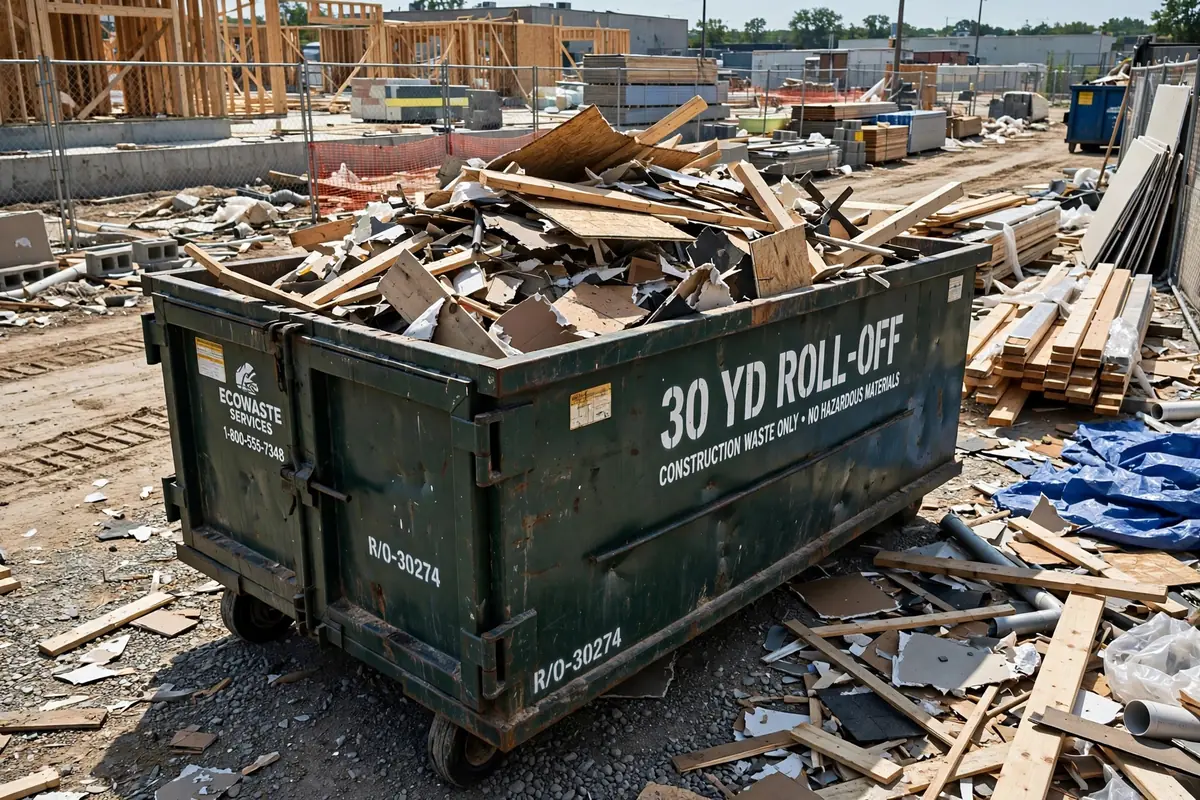
A 30-yard dumpster is a large roll-off container built for jobs where debris comes off fast and from more than one direction at once, and the roofing tear-off is the clearest example. It holds about 30 cubic yards of material, roughly nine pickup truck loads, and it is the size roofing crews and renovation crews choose when a 20-yard container would fill up before the first day is over. The container is taller than the mid-size models, with a rear door in many models that opens so debris can be walked in, and a truck delivers it, sets it in place, and hauls it away when you call. For a dumpster and porta potty rental nationwide request that also covers a large build, the 30-yard container is the workhorse size that keeps a busy site clear, because it takes the roof and the rooms in the same load.
On a roofing tear-off, the pace is the problem the container solves. Shingles, underlayment, flashing, drip edge, and damaged decking boards come off the roof in a steady stream, and the ground crew needs a destination within a few steps of the house, or the yard fills with shingles and the crew stops to clear space. On a large renovation, the same container takes the inside of the house: drywall, studs, insulation, flooring, and cabinets from several rooms at once, as the crew guts one room and starts the next. Because it is large, it needs a clear and level site with room for the delivery truck to set it down and to return for pickup, and it is usually placed on a driveway, a lot, or a jobsite pad rather than a tight residential drive. The weight allowance is higher than a smaller container, and on a roofing job that allowance matters more than the volume, since shingles are heavy and a tear-off can reach the weight limit before the container looks full, so tell the provider how many layers are coming off the roof.
What a 30-Yard Dumpster Rental Involves
A 30-yard rental starts with a description of your job: the roof being torn off and how many layers of shingles are coming with it, the rooms being renovated and what is coming out of them, where the container will sit, and how long you need it. The provider quotes a price that usually covers delivery, a rental period of about a week, a set weight allowance, and pickup, and for a longer job the rental period can be extended. On delivery day, the truck sets the container on a firm and level surface, close to the house where the tear-off crew can reach it, and checks that the placement leaves room for the crew and for the truck to return. You load the container as the job goes on, keeping debris below the top edge and keeping banned items out, and you call for pickup when the job is done or the container is full. For a long job, ask the provider about a swap schedule, so a full container is replaced with an empty one without slowing the crew.
On a roofing tear-off, the loading order matters more than on any other job. Shingles go in low and flat, since they are the heaviest material in the load, and decking boards and underlayment go in around them. Renovation debris from inside the house goes in next, with flat drywall and flooring at the bottom of each layer and bulky cabinets broken down before they go in, so the container fills evenly instead of leaving air gaps. Tarps under the eaves catch the shingles as they come off the roof, and the ground crew carries them to the container in a steady stream, so the yard never holds more than one round of debris at a time. If the tear-off uncovers a second layer of shingles, or the renovation opens up another room, tell the provider at once, since that is the point where a swap enters the schedule.
Walk the roofline with the crew lead before tear-off day and note what else is coming off besides the shingles. Ridge cap, valley flashing, pipe boots, roof vents, skylight flashing, chimney flashing, fascia boards, and the gutters the crew removes all go in the container, and they are long, awkward pieces that fill a box with air gaps unless they are laid flat. Note the valleys and the ridges, since those runs collect extra layers, and note any damaged decking the crew finds under the shingles, since a rotten board means more decking in the load than the quote counted. A walk made before tear-off day keeps the weight allowance honest and keeps the swap schedule real.
Common Problems a 30-Yard Dumpster Solves
A 30-yard dumpster solves the problem of a large job that produces debris faster than a small container can take it. Without it, a roofing tear-off means shingles piled on the lawn, in the driveway, and along the side of the house, with the crew stopping work to clear space, and a large renovation means the same pile inside the house. The container solves that by giving the crew one large place to put everything, right beside the work area, so the job stays tidy and the work moves at full pace.
- A tear-off crew outrunning a small container. Shingles come off the roof in a rush on tear-off day, and a container sized for a kitchen fills before the first slope is bare. The 30-yard box takes the whole tear-off in stride, so the crew keeps tearing off instead of waiting for a truck.
- Several rooms gutted at the same time. Drywall, studs, insulation, flooring, and cabinets from a kitchen, two bathrooms, and a hallway arrive in one stream, and no single room of debris fits a small container. One large box takes the whole renovation as the crew moves from room to room.
- Decking, underlayment, and flashing with nowhere to go. A tear-off produces more than shingles: damaged decking boards, torn underlayment, flashing, and drip edge all come off with the roof, and they are long, awkward pieces that fill a small container with air gaps. The large box takes them flat.
- Swaps every day slowing the crew. A container that fills by midday means a truck in the driveway every day and a crew standing around while it is swapped. A 30-yard box stretches the time between swaps, so the crew works instead of waiting.
- Heavy and bulky debris in the same job. Shingles are heavy and cabinets are bulky, and a job that produces both needs a container with room for the bulk and an allowance for the weight. The 30-yard size is built for that mixed load, with the weight allowance to match.
It also solves the problem of a large addition or a commercial fit-out, where the volume of cabinets, fixtures, drywall, and flooring would fill a smaller container in a day. For a builder, the container keeps the site walkable instead of buried under its own waste, and for a homeowner the difference is a renovation that finishes on schedule instead of stalling on debris.
Signs You Need a 30-Yard Dumpster
You need a 30-yard dumpster when a renovation covers most of a house, when a roof is being torn off, or when a new addition is being built. The roofing tear-off gives the clearest signs, and they show up in the roof itself and in the rooms below it.
- Tear-off day is set and the roof has layers to come off. If the crew is booked and the roof carries old shingles, underlayment, and decking to replace, the debris starts the moment the first shingle comes off, and it needs a large container waiting in the driveway.
- The renovation covers several rooms at once. A kitchen, two bathrooms, and a hallway gutted together produce drywall, flooring, and cabinets in one stream, and a container built for one room will fill before the second room is open.
- An addition is going up. Framing offcuts, drywall, and flooring waste arrive every day an addition is built, and a container that fills in a day means the crew spends its time waiting for swaps instead of building.
- A 20-yard container would need swapping every day or two. If you can picture the tear-off alone filling a mid-size box, the job has outgrown that size, and ordering it means paying for a swap schedule from the first day.
- Debris is already staged in the yard. Shingles, decking boards, and drywall stacked along the side of the house mean the job is producing waste with no destination, and the yard will keep filling until a large container arrives.
A whole-house gut, a large kitchen and bathroom remodel together, a multi-room flooring job, or a construction project with daily debris are all clear signs as well. If you are unsure between sizes, our guide on what size dumpster do I need compares jobs by size, and the provider can advise once you describe the debris and the pace of the job.
Benefits of Renting a 30-Yard Dumpster
The main benefit of a 30-yard dumpster is capacity for a job that produces debris from the roof and from the rooms at the same time: it holds enough for a tear-off and a large renovation without constant swaps, so the crew keeps working instead of waiting for a truck. The cost per cubic yard is usually lower than a smaller container, since one large delivery and pickup replaces several small ones. The container can stay on site for the whole job, giving the crew a single place for debris from start to finish, and the rear door on many models makes loading heavy items easier.
- One box for the roof and the renovation. Shingles, decking, drywall, flooring, and cabinets go into the same container, so a job that works outside and inside at once has a single destination for its waste.
- Fewer swaps, steadier work. A tear-off crew that would fill a small container by midday keeps working with a 30-yard box, and the swap, when it comes, is one truck visit instead of a daily interruption.
- Room for long, awkward pieces. Decking boards, flashing, and drip edge lie flat in a large container instead of bridging across a small one and leaving air gaps that waste space.
- A weight allowance built for shingles. The higher allowance in the quote matches the heavy load a tear-off produces, so the container can take the shingles without reaching its limit on the first slope, as long as the provider knows how many layers are coming off.
- A tidy site from tear-off to finish. For a contractor, the benefit is a site the crew can walk through without climbing over debris; for a homeowner, it is a renovation that finishes on schedule, with the waste leaving on a truck instead of piling in the yard.
For a large renovation, stage debris near the container and load it in layers, with flat material at the bottom, so the container fills evenly and stays below the top edge. That layering is what lets a 30-yard box hold a tear-off and a renovation together without wasting the space at the top.
For a roofing tear-off, load shingles low and flat, since they are the heaviest material in the load. Put decking boards and underlayment in next, then drywall and flooring from the renovation on top, and keep the load level with the top edge.
How the Rental Process Works
A roofing tear-off runs on a crew schedule, so the container booking starts with the tear-off date and the roof itself: call (855) 645-2976 with the size of the roof, how many layers of shingles are coming off, and whether decking is being replaced, plus the rooms being renovated and what is coming out of them, so the quote matches the load and the weight allowance fits the tear-off. We match you with a local provider, who shares a quote covering delivery, the rental period, the weight allowance, and pickup. Once you accept, the provider confirms the delivery day and the placement spot, and asks about site access, overhead wires, and the ground. Aim for delivery the day before tear-off day, so the container is waiting when the first shingle comes off the roof. On delivery day, the truck sets the large container on the firm spot near the house and checks that the tear-off crew can reach it. You load it over the rental period, keeping debris below the top edge, and call for pickup or a swap when it is full. If the job runs longer than expected, call the provider before the rental period ends to arrange extra days. If you are unsure how long the job will run, see how long you can rent a dumpster for typical rental periods and extension terms.
A useful step before delivery day is to walk the site with the container in mind. Check that the ground is firm and level, that the truck can reach the spot and turn around, and that there are no low branches or wires overhead, since the truck needs more room for a container this size. Clear the area of cars, materials, and equipment, and mark the exact spot for the driver, close to the house where the tear-off crew can reach it. Lay tarps under the eaves before the crew starts, so shingles land on the tarp and move to the container in a steady stream. If the container will sit on the street, check whether your town needs a permit, since a street placement may need one while a driveway or a private lot usually does not. Our guide to dumpster rental permit requirements covers the usual rules, and the provider can tell you what applies in your town.
30-Yard Dumpster Details to Know
A 30-yard dumpster holds about 30 cubic yards of debris, roughly nine pickup truck loads, and it is the large roll-off size most providers carry for renovation and construction work. It is taller than a 20-yard container, so it holds more, yet it can still be placed on a firm driveway or a jobsite pad, and many models have a rear door that opens so the crew can walk decking boards and drywall in. That height is what lets a tear-off and a renovation share one box: shingles lie low and flat, decking boards stack beside them, and drywall, flooring, and cabinets from several rooms fill the space above. The container suits mixed debris from a major job, such as drywall, wood, flooring, cabinets, and roofing material, and the weight allowance is higher than a smaller container. Concrete, brick, or dirt can still reach the limit fast, so tell the provider what you are loading, and tell the provider how many layers of shingles are coming off the roof, since that is the number that decides whether the weight allowance fits the tear-off. If your job is even larger, a 40-yard dumpster rental may be the better fit.
30-Yard Dumpster Rental in Texas
Texas roofing tear-offs and large renovations make regular use of 30-yard dumpsters, from roof replacements after storm season in Houston to large home remodels across the state. Heat and sudden rain can change ground conditions fast, so a firm and level placement matters, and a container that arrives before tear-off day keeps shingles off the lawn from the first hour. Tile roofing is common in Texas, and tile adds weight faster than asphalt shingles, so tell the provider the roofing material when you book.
Storm season drives much of the roofing work in Texas, and a storm job has its own rhythm. Hail bruises shingles, wind lifts them along the ridges and the valleys, and a leak stain on a ceiling often shows up days after the storm has passed. A crew tarps the damaged slope first, then the tear-off follows, and the container needs to be in place before the tarping crew leaves, so the torn-off shingles go straight in. If an insurance adjuster is visiting, the container should not block the roofline the adjuster needs to see, and the ridge vents and the attic ventilation the crew checks stay clear of the load. Providers serving Texas are used to large lots, gated properties, and jobsites with limited access, and they can advise on the weight allowance and on a swap schedule for a long job. If the tear-off or the renovation is in the Houston area, our Texas pages cover Baytown, Beaumont, Port Arthur, and Texas City, and a quote for a roofing tear-off or a large renovation in your town is only a call away.
Frequently Asked Questions
How much does a 30-yard dumpster cost to rent?
A 30-yard dumpster typically costs $450–$750 for a rental of about a week, and the price varies by location, rental length, and the weight of the debris. Extra days, swaps, and overweight charges can change the total. Call (855) 645-2976 for a free quote.
How many squares of shingles fit in a 30-yard dumpster?
There is no fixed count, because it depends on how many layers of shingles are coming off, the type of shingle, and the weight allowance in your quote. A tear-off can reach the weight limit before the container looks full. Tell the provider the size of the roof and how many layers are coming off when you call, and they can advise on the size and on swaps.
Is a 30-yard dumpster the right size for a roofing tear-off?
Yes, for a full tear-off on a mid-size to large roof, and for a tear-off running alongside a large renovation. For a small roof or a single slope, a 20-yard container may be enough. Describe the roof, the layers, and the renovation scope to the provider and they can advise.
Can a 30-yard dumpster take shingles, decking, and drywall at the same time?
Yes, it takes mixed loads. Load the heavy shingles low and flat, put decking boards and underlayment in next, and put drywall and flooring from the renovation on top. Keep the load below the top edge, watch the weight, and tell the provider the mix when you book.
Where does a 30-yard dumpster go on a roofing job?
On a firm, level spot close to the house, usually a driveway or a jobsite lot, with room for the delivery truck to set it down and return for pickup. Keep it clear of low wires and branches, and keep the path from the eaves to the container open so the ground crew can carry shingles to it in a steady stream.
What happens if the 30-yard dumpster fills up before the roof is finished?
Call the provider for a swap, so the full container is replaced with an empty one. Do not pile shingles beside the container or overfill it. On a long job, agree the swap timing with the provider in advance, so the crew keeps working while the truck is on its way.
Cost Considerations
A 30-yard quote depends on your location, the rental length, the weight of the tear-off, and the type of material. The usual quote covers about a week with a set weight allowance, and extra days, swaps, and overweight charges add to the total. On a roofing tear-off, weight is the cost driver more than volume: shingles are heavy, and a tear-off with more than one layer can reach the weight allowance before the container looks full, so the number of layers and the roofing material decide the quote more than the size of the roof alone. On a large renovation, the driver is the pace of the job: a crew gutting several rooms at once fills the container fast, and a swap schedule adds to the total, so agreeing the swap timing in advance keeps the cost clear. The typical ranges in the table below give a sense of the market, and the price you are quoted varies by location and by provider. To keep costs down, share an accurate description of the shingles, the decking, and the renovation debris, keep the weight of the tear-off in mind, and avoid ordering a larger container than the roof and the rooms need. Ask for a quote that lists delivery, the rental period, the weight allowance, swaps, and pickup on separate lines, and compare tear-off quotes line by line, since the weight allowance and the swap timing move the total more than the headline number does.
| Item | Typical range |
|---|---|
| 30-yard dumpster, 7-day rental | Typically $450–$750, varies by location |
| Extra day | Typically $15–$35 per day, varies by location |
| Overweight charge | Varies by provider and by ton, varies by location |
When to Call a Professional
Call a professional when a roofing tear-off is about to start, when a large renovation is about to start, or when a new addition is being built. Call before the job starts, so the container is in place on day one and debris has somewhere to go from the start. For a roofing job, that means calling before tear-off day, so the first shingle comes off the roof into a container instead of onto the lawn. For a large renovation, call before the crew opens the first room, so drywall and cabinets go straight into the container as they come out. You should also call if the tear-off has filled the box before the last slope is bare, if the renovation has opened another room, or if you are unsure what can go in the dumpster. A short call to (855) 645-2976 can settle the size, the placement, and the quote, and the provider can advise on the weight limit and the banned items for your load.
A 30-yard container is tall and heavy when full. Keep children and bystanders clear of it, and never climb inside a loaded container.