
Dumpster and Porta Potty Quotes Blog
How Long Can You Rent a Dumpster?
Reviewed 8 November 2026
Standard rental periods, extension fees, and how to time delivery and pickup around your project.
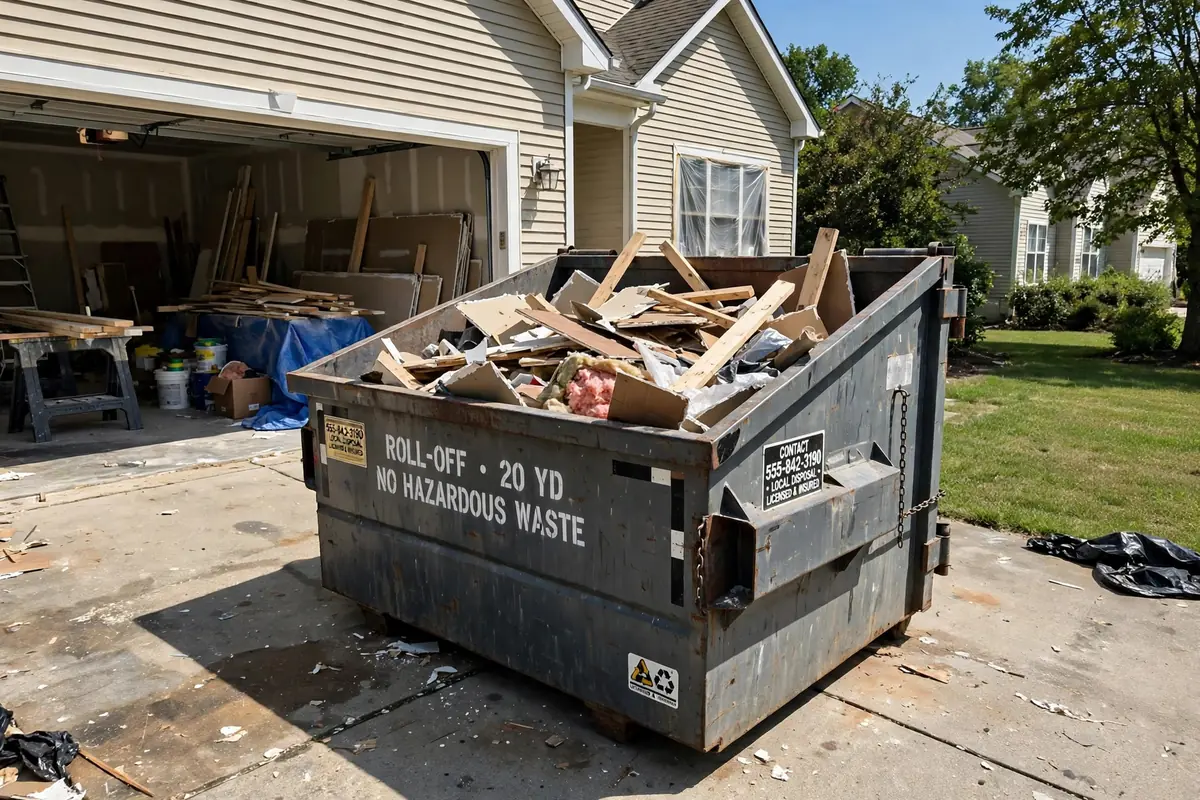
A standard dumpster rental lasts 7 to 14 days, and you can keep the dumpster longer for an extension fee. Most providers include a week or two in the quoted price, and keeping the dumpster for extra days usually costs $10 to $25 per day. Monthly rentals are common for construction projects and long remodels, and there is no fixed maximum length — the provider will keep the dumpster on site for as long as you need it and pay for the extra time. The key is to agree on the rental length and the extension rate before you book, so the bill holds no surprises.
Rental length is one of the first things a provider will ask about, because it shapes the quote and the pickup schedule. A cleanout that takes a weekend needs a short rental, while a remodel that takes a month needs a longer one. A rental that starts as a week and stretches into a month is common, because projects rarely finish on the first estimate. This guide explains the standard periods, the extension fees, and how to time delivery and pickup so the dumpster is there when you need it and gone when you do not.
How Long Is a Standard Dumpster Rental?
Most providers offer a rental period of 7 to 14 days as standard. A 7-day rental is common for a cleanout or a small remodel, and a 14-day rental is common for a larger remodel or a roof tear-off. The exact length depends on the provider, so ask for the rental period in writing when you get your quote. The period usually starts on the delivery day and ends on the pickup day, so a dumpster delivered on a Monday with a 7-day rental is picked up on the following Monday.
| Project type | Usual rental length |
|---|---|
| Garage or room cleanout | 7 days |
| Kitchen or bathroom remodel | 7–14 days |
| Roof tear-off | 7 days |
| Whole-home cleanout | 14 days |
| Construction project | 14–30 days or more |
A 20-yard dumpster is the most common size for a 7 to 14-day rental, because it fits a mid-size remodel or a cleanout and still fits in a driveway. A 10-yard dumpster suits a short cleanout, and a 30-yard dumpster suits a larger project that needs more time and more room. The size and the length go together: a larger project needs a larger dumpster and a longer rental.
Can You Keep a Dumpster Longer?
Yes. Extending a rental is a routine request, and most providers will extend by the day or by the week. The extension rate is usually $10 to $25 per extra day, and prices vary by location and by the provider. Some providers offer a weekly extension rate that is lower than the daily rate, so a full extra week can cost less than seven single days.
Arrange the extension before the rental ends. Call the provider a few days before the pickup date, tell them how much longer you need the dumpster, and ask them to confirm the new pickup date and the price. An extension arranged early is simple and cheap. An extension arranged after the pickup date can cost more, because the provider may have already scheduled the truck for another job, or may charge a fee for the extra days.
Tip: Put the pickup date on your calendar when you book, with a reminder three days before it. That reminder gives you time to decide whether to extend or to finish loading and let the dumpster go.
Can You Rent a Dumpster for a Month or More?
Yes. Monthly rentals are common for construction projects, long remodels, and any job where debris is produced over weeks rather than days. The provider usually charges the standard rental price plus a daily or weekly extension rate, or a flat monthly rate. Ask for the monthly price in writing, because the rate for a month-long rental is often lower per day than the rate for a short rental.
For a very long rental, ask the provider about a swap-out service. A swap-out means the provider picks up the full dumpster and drops off an empty one on the same trip, so the crew can keep working without a gap. A swap-out usually costs about the same as a new rental, minus a small discount for the shared trip. It is the simplest way to handle a project that produces debris for months.
What Happens If You Are Not Done on Pickup Day?
If the project runs over, call the provider before the pickup date and ask to extend. If the driver arrives and the dumpster is not ready for pickup — because it is still being loaded, or because a car is blocking the driveway — the provider may charge a dry-run fee for the missed trip, usually $50 to $100. A dry-run fee is easy to avoid with a quick call.
If the dumpster is full before the rental ends, call the provider and ask for an early pickup or a swap-out. An early pickup is usually free or low cost, because the provider can collect the full dumpster and reuse the truck time. A swap-out gives you a fresh, empty dumpster on the same trip, so the work does not stop.
Note: Do not overload the dumpster to avoid a second rental. Debris piled above the rim cannot be covered for the road, and the driver may refuse pickup until the load is leveled. A second rental or a swap-out is cheaper than a refused pickup and a delayed project.
How Do You Time Delivery and Pickup?
Time the delivery for the day you start loading, not a week before. A dumpster that sits empty in the driveway wastes rental days and takes up space you may need for other work. Schedule delivery for the morning of the first loading day, and schedule pickup for the day after you finish loading. That way the rental period covers the work, not the waiting.
For a remodel, schedule delivery for the day demolition starts, so the debris goes straight into the dumpster instead of piling up in the yard. For a cleanout, schedule delivery for the morning you start clearing rooms, and pickup for the day after you finish. For a roof tear-off, schedule delivery for the morning the crew arrives, and pickup for the day after the tear-off is done. A tight schedule keeps the rental short and the bill low.
What Affects the Rental Length You Need?
Three things change the length you need. First, the project size: a larger project takes longer to load, so it needs a longer rental. Second, the crew size: a crew of one loads slower than a crew of five, so a solo project needs more days. Third, the weather: rain can pause outdoor work, and a project that pauses for weather needs a longer rental. Add a few days to your first estimate, because most projects run longer than expected, and a rental with room to spare is cheaper than an extension arranged at the last minute.
As a nationwide quote-matching service, we connect you with independent local providers who can set up a rental for any length, from a week to a month or more. Tell us the project and the dates, and we will match you with providers in your area for a free, no-obligation quote. Call (855) 645-2976 — prices vary by location, so a quote for your address is the only price that counts.
When the rental length is decided, our dumpster rental page can match you with a provider for your dates.
Frequently Asked Questions
How long is a standard dumpster rental?
A standard dumpster rental is usually 7 to 14 days, including delivery and pickup. The exact length depends on the provider, so ask for the rental period in writing when you get your quote.
Can I keep a dumpster longer than 14 days?
Yes. Most providers will extend a rental by the day or by the week, usually for $10 to $25 per extra day. Call the provider before the rental ends to arrange the extension and confirm the price.
Can I rent a dumpster for a month?
Yes. Monthly rentals are common for construction projects and long remodels. The provider usually charges the standard rental price plus a daily or weekly extension rate, or a monthly rate. Ask for the monthly price in writing.
What happens if I am not done when pickup is scheduled?
Call the provider before the pickup date and ask to extend. If the driver arrives and the dumpster is not ready, the provider may charge a dry-run fee for the missed trip, so an early call saves money.