
Dumpster and Porta Potty Quotes Blog
How Many Porta Potties Do I Need?
Reviewed 8 November 2026
Guest counts, hours, and event type — turned into a simple number you can book with confidence.
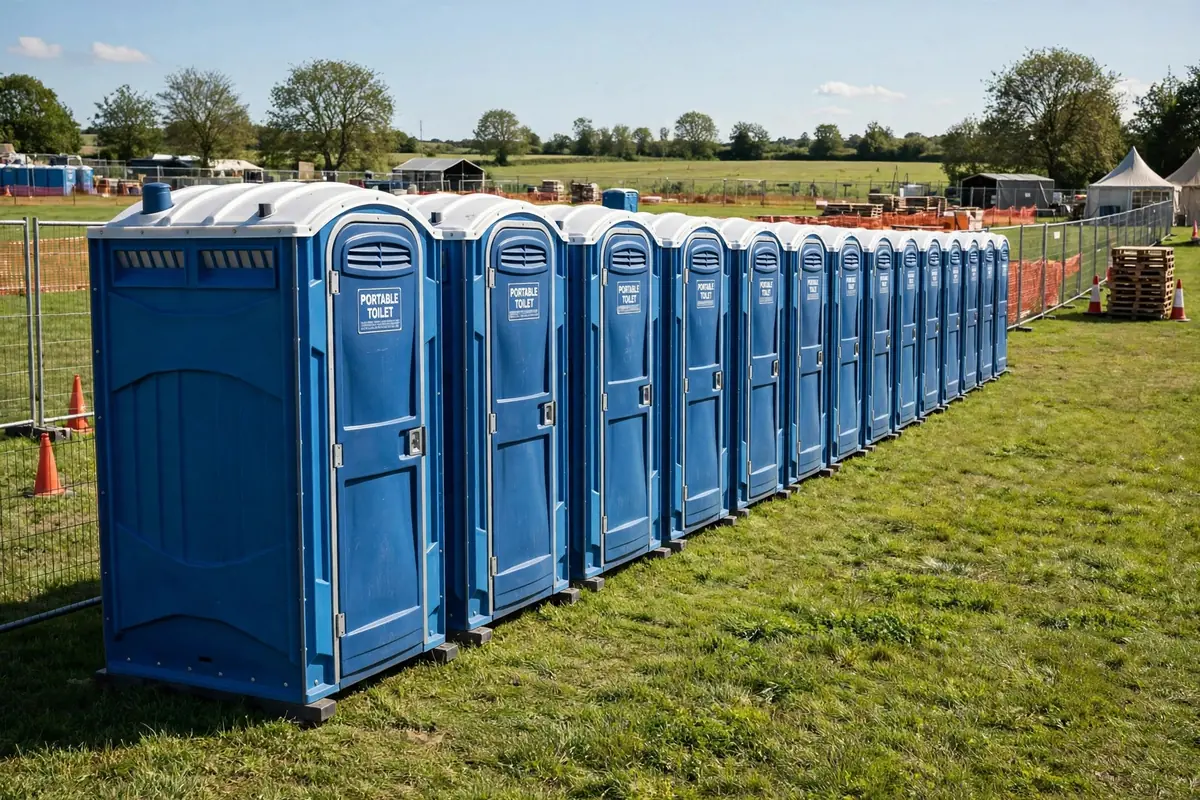
For a four-hour event, a useful starting point is one porta potty for every 50 guests. A gathering of 50 people usually needs one unit, 100 people usually need two, and 250 people usually need five. For an all-day event, add about one extra unit for every 100 guests, because people use the facilities more often over a longer day. For a construction site, the common rule is one toilet for every 20 workers. These are starting points, not fixed rules — food, drink, weather, and the mix of guests all shift the number up or down.
Getting the count right matters more than most people think. Too few units means long lines, a unit that fills up before the event ends, and guests who remember the wait more than the event itself. Too many units means money spent on toilets nobody uses. The goal is a count that keeps lines short all day without paying for units that sit empty. This guide gives you tables you can use in a minute, then explains the details that change the number for your specific event or jobsite.
How Many Porta Potties Do I Need for an Event?
The table below covers a four-hour event with average use. It assumes guests are adults, drinks are served in normal amounts, and no other restrooms are available on site. If your event is longer, use the second table instead.
| Guests (4-hour event) | Porta potties |
|---|---|
| Up to 50 | 1 |
| 51–100 | 2 |
| 101–150 | 3 |
| 151–200 | 4 |
| 201–250 | 5 |
| 251–300 | 6 |
| 301–400 | 8 |
| 401–500 | 10 |
For an all-day event of eight hours or more, add roughly 50 percent to the count. A 100-person all-day festival usually needs three units instead of two, and a 250-person all-day event usually needs seven or eight. The reason is simple: over eight hours, each guest visits more often, and the holding tank fills faster. A mid-event servicing visit can help, but it does not replace having enough units in the first place.
What Changes the Number?
The table is a starting point. Five details can push your number up by one or two units, and it is better to count them before you book than to wish you had on the day.
- Alcohol. Beer, wine, and cocktails increase restroom use noticeably. For an event where alcohol is a big part of the day, add one extra unit for every 100 guests.
- Food and drink volume. A barbecue with unlimited drinks, a festival with food stalls, or a hot day with plenty of water all raise use. A short meeting with coffee and water does not.
- Children and families. Families with young children visit more often and take longer per visit. A family event usually needs one extra unit compared with an adult-only event of the same size.
- Women and men. Women generally take longer per visit than men, so an event with mostly women guests benefits from an extra unit. A mix of units and a urinal option can also speed up the line.
- No other restrooms. If the venue has indoor restrooms too, you can reduce the portable count. If the portable units are the only option, keep the full count from the table.
When in doubt, round up. One extra standard porta potty for a weekend event typically costs $125 to $275, and prices vary by location. That is a small price for shorter lines and a unit that stays usable all day. It is also far cheaper than an emergency servicing call or a unit that has to be closed early because the tank is full.
How Many Porta Potties Do I Need for a Construction Site?
Jobsites follow a different rule from events. Workers use the unit every day, for weeks or months, so the count is based on crew size and the service schedule rather than a single day of guests. The widely used guide is one toilet for every 20 workers, with servicing at least once a week.
| Workers on site | Porta potties | Usual servicing |
|---|---|---|
| 1–10 | 1 | Once a week |
| 11–20 | 1 | Once a week |
| 21–40 | 2 | Once a week |
| 41–60 | 3 | Once a week |
| 61–80 | 4 | Once or twice a week |
| 81–100 | 5 | Twice a week |
For a jobsite, a standard porta potty is the usual choice, and it is placed near the work area so workers do not lose time walking to it. If the crew works long shifts, or the site is in hot weather where workers drink more water, consider an extra unit or a second servicing visit each week. A unit that is serviced on schedule stays clean, keeps odors down, and keeps the crew on site instead of leaving to find a restroom.
Note: Jobsite restroom rules vary by state and by the type of work. The one-per-20-workers guide is a common starting point, and your provider can confirm what fits your crew and your local rules.
Do I Need an ADA Unit or a Handwashing Station?
Most events should include at least one accessible unit. As a general guide, about 5 percent of the units at a public event should be accessible, with a minimum of one. So an event with ten units would include one ADA porta potty, and a larger event would include more. The accessible unit has a wider door, a ramp, and room inside to turn a wheelchair. Place it on flat, firm ground near the main path, not at the far end of a row.
A handwashing station is a separate unit with a water tank, soap, and paper towels. It is a good idea for any event where food is served, and for jobsites where workers eat on site. A useful guide is one station for every four to five portable toilets, or one station near each group of units. Guests notice when handwashing is easy, and it keeps the event feeling clean and cared for.
Where Should I Place the Units?
Placement affects how well your count works. Units grouped together are easier to service, and guests can see at a glance which units are free. Place the group where guests can find it without a long walk, but not right next to the food tables or the main seating area. A spot with flat, firm ground and easy truck access makes delivery and servicing simple.
For a large site, split the units into two or three groups instead of one long row. A festival with units at both ends of the grounds cuts walking time and spreads out the lines. For a wedding, place the units behind a hedge, a fence, or a decorative screen so they do not appear in photos. For a jobsite, place the unit near the work area but clear of vehicle traffic and falling debris.
Tip: Walk the site before delivery day and mark the spot with a cone or a flag. A clear, agreed spot avoids a last-minute move when the truck arrives.
How Do I Get the Count Right for My Event?
Start with the table, then adjust for alcohol, children, event length, and the guest mix. If your event falls between two rows of the table, round up to the higher count. Then call the provider and describe the event in a few sentences: the guest count, the hours, whether food and alcohol will be served, and whether other restrooms are available. A provider who hears those details can confirm the count or suggest a change, and that confirmation is worth more than any table.
As a nationwide quote-matching service, we connect you with independent local providers who know the events and jobsites in your area. Tell us the guest count and the date, and we will match you with providers who can confirm the right number of units and give you a clear quote. Call (855) 645-2976 for a free, no-obligation quote — prices vary by location, so a quote for your address is the only price that counts.
With the count worked out, get porta potty rental quotes for the number of units you need.
Frequently Asked Questions
How many porta potties do I need for 50 people?
For 50 people at a four-hour event, one unit is usually enough, though two units keep lines short and give guests a backup. For an all-day event with 50 people, two units are a safer choice.
How many porta potties do I need for 100 people?
For 100 people at a four-hour event, two units are the usual starting point. For an all-day event, plan on three units, and add a handwashing station so guests can wash up after using the toilet.
How many porta potties per person at a construction site?
A common rule is one toilet for every 20 workers on site, with servicing at least once a week. Larger crews, longer shifts, or sites with no other restrooms nearby may need more units or more frequent servicing.
Do I need a handwashing station with my porta potties?
It is a good idea for any event where food is served, and for jobsites where workers handle food or materials. One handwashing station per four to five units is a useful guide, or one station near each group of units.