
Dumpster and Porta Potty Quotes Blog
Porta Potty for Construction Sites: OSHA Requirements
Reviewed 8 November 2026
How many toilets a jobsite needs, where they should go, and how servicing keeps a crew working.
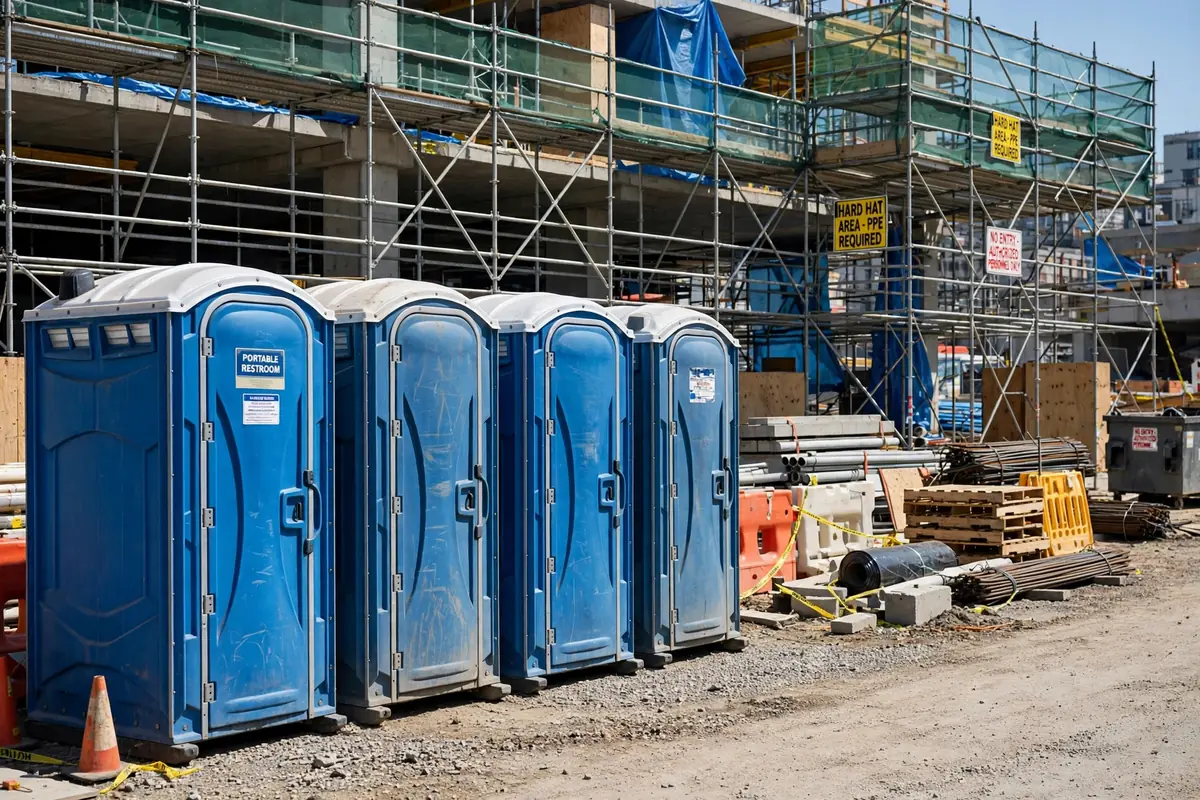
For a construction site, OSHA guidance generally calls for one toilet for every 20 workers, with servicing at least once a week. A crew of 20 or fewer usually needs one unit, a crew of 21 to 40 usually needs two, and larger crews add roughly one unit for every 20 to 40 extra workers. Handwashing facilities should also be available on site. This guide explains the rules in plain terms, but it is not legal advice — check the current OSHA standard and your state rules, or ask your provider, before you set the final count for your site.
Restrooms on a jobsite are not a perk. They are part of keeping a crew safe, healthy, and on schedule. A worker who has to leave the site to find a restroom loses time, and a site with too few units or units that are not serviced will see morale and productivity drop fast. The good news is that the rules are simple, the units are affordable, and a local provider can handle delivery, servicing, and pickup for the whole length of the job. This guide covers the count, the placement, the servicing, and the handwashing side, so you can set up a jobsite that passes inspection and keeps the crew comfortable.
How Many Toilets Does OSHA Require on a Construction Site?
The construction sanitation standard, OSHA 1926.51, sets out how many toilets a site should provide based on the number of workers. The table below shows the commonly used counts. Your state may add its own rules on top of the federal standard, so treat this as a starting point and confirm the details for your site.
| Workers on site | Toilets usually needed |
|---|---|
| 20 or fewer | 1 |
| 21–200 | 1 per 40 workers |
| More than 200 | 1 per 50 workers |
OSHA has also answered questions about how the toilet count applies on a job site in an interpretation letter on section 1926.51(c)(1).
In practice, most contractors use a simpler rule: one unit for every 20 workers, with weekly servicing. That is more generous than the minimum for a large crew, and it keeps lines short and units clean. For a crew of 60, that means three units. For a crew of 100, that means five. A standard porta potty is the usual choice for a jobsite, and a monthly rental typically costs $150 to $350 per unit, with prices that vary by location and service schedule.
Count the largest crew you expect on any single day, not the average. A framing crew, a roofing crew, and an electrical crew can all be on site at once during a busy stretch, and the toilet count has to cover that peak day. If the crew size will grow as the job goes on, ask the provider to add a unit when the new crew arrives. Adding a unit mid-job is a normal request and usually takes a day or two to arrange.
Where Should Porta Potties Go on a Jobsite?
Placement matters for safety, for use, and for servicing. A unit that is easy to reach gets used, and a unit that the service truck can reach gets serviced on time. Place units on flat, firm ground near the work area, where workers can reach them without crossing vehicle traffic or walking a long way. Keep them clear of falling debris, crane swing areas, and excavation edges.
- Near the work, not at the gate. A unit by the entrance is easy for the truck but far from the crew. Place units where the work is happening.
- On level ground. A unit on a slope can tip or feel unstable. A flat spot keeps the door working and the tank level.
- Clear of traffic. Keep units out of the path of trucks, forklifts, and delivery vehicles. A barrier or a few cones can mark the spot.
- Easy truck access. The service truck needs to get close to the unit to empty and clean it. A spot the truck can reach saves time and avoids extra fees.
- More than one group on large sites. On a large site, split the units into two groups so no worker has a long walk. A unit at each end of a long site works better than five units at one end.
As the job moves, the units may need to move too. A provider can usually relocate a unit within the site for a small fee, or at no charge if the move is simple. Tell the provider when the work area shifts, and agree on the new spot before the next service visit.
How Often Should a Jobsite Porta Potty Be Serviced?
Once a week is the usual minimum for a construction rental. Servicing means emptying the holding tank, cleaning the inside, restocking toilet paper and hand sanitizer, and checking the door, the lock, and the ventilation. A clean unit gets used, and a dirty unit gets avoided, which defeats the purpose of having it.
Some sites need more frequent servicing. A large crew, a long shift, hot weather, or a site with no other restrooms nearby can fill a unit faster. If the unit starts to smell, runs out of paper, or looks dirty before the next scheduled visit, ask the provider to add a second weekly visit. A second visit usually costs $50 to $100 per unit, and prices vary by location. It is far cheaper than a crew that leaves the site to find a restroom.
Tip: Put the service day on the calendar and tell the crew. A unit that is serviced on a known day stays cleaner, because the crew knows when to expect it and the provider knows the site will be ready.
Do Construction Workers Need Handwashing Facilities?
Yes. Workers should be able to wash their hands on site, and the need is greater where workers handle chemicals, dust, or food. A handwashing station gives running water, soap, and paper towels, and one station for every four to five units is a useful guide. A deluxe porta potty with a sink inside is another option, and it works well for a small crew that needs only one or two units.
Handwashing is easy to forget when you are focused on the toilet count, but it matters for health and for the work itself. Workers who handle concrete, paint, solvents, or dusty materials should wash before eating or drinking. A station placed next to the toilets, where workers pass it on the way back to the job, gets used far more than a station tucked away at the edge of the site.
What About Accessible Units on a Jobsite?
A jobsite with a worker who uses a wheelchair or a mobility aid should include an accessible unit. An ADA porta potty has a wider door, a ramp, grab bars, and room inside to turn. Place it on flat, firm ground near the main path, with a clear route from the work area. The cost is usually $200 to $450 per month, and prices vary by location.
Even if no worker on the crew needs an accessible unit today, it is worth asking the provider about one when the crew changes. A site that can add an accessible unit quickly is a site that is ready for any worker who joins the job.
How Do You Rent Porta Potties for a Jobsite?
Renting for a jobsite is a simple process, and a local provider handles most of it. Tell the provider the site address, the start date, the expected length of the job, the largest crew size, and where the units should go. The provider will suggest a count, a service schedule, and a price, and will deliver the units before the crew arrives.
Ask the provider to confirm four things in writing: the number of units, the service days, the rental length, and what happens if the job runs longer than the agreed period. Most providers will extend a rental by the week or by the month, and the extension price is usually close to the original monthly rate. Agreeing on the extension terms at the start avoids a surprise bill if the job runs over.
As a nationwide quote-matching service, we connect you with independent local providers who serve construction sites in your area. Tell us the crew size and the job length, and we will match you with providers who can confirm the right count and give you a clear quote. Call (855) 645-2976 for a free, no-obligation quote.
For a crew setup that meets the rule, our porta potty rental for job sites page lists the units and handwashing stations that pair with a job site.
Frequently Asked Questions
How many toilets does OSHA require on a construction site?
OSHA guidance for construction sites generally calls for one toilet for every 20 workers, with more toilets as the crew grows. For a crew of 20 or fewer, one toilet is the usual minimum. Check the current OSHA standard and your state rules for your specific site.
Do construction workers need handwashing facilities?
Yes. Construction sites should provide a way for workers to wash their hands, such as a handwashing station or a deluxe unit with a sink. Handwashing is especially important where workers handle food, chemicals, or dusty materials.
How often should a construction porta potty be serviced?
At least once a week is the usual minimum for a construction rental. Busy sites, large crews, and hot weather may need servicing twice a week to keep the unit clean and usable.
Where should porta potties go on a jobsite?
Place units on flat, firm ground near the work area, clear of vehicle traffic and falling debris, with easy access for the service truck. Workers should be able to reach a unit without a long walk across the site.