
Dumpster and Porta Potty Quotes Blog
What Can You Put in a Dumpster?
Reviewed 8 November 2026
The full list of allowed items, the items providers will not take, and what to do with the rest.
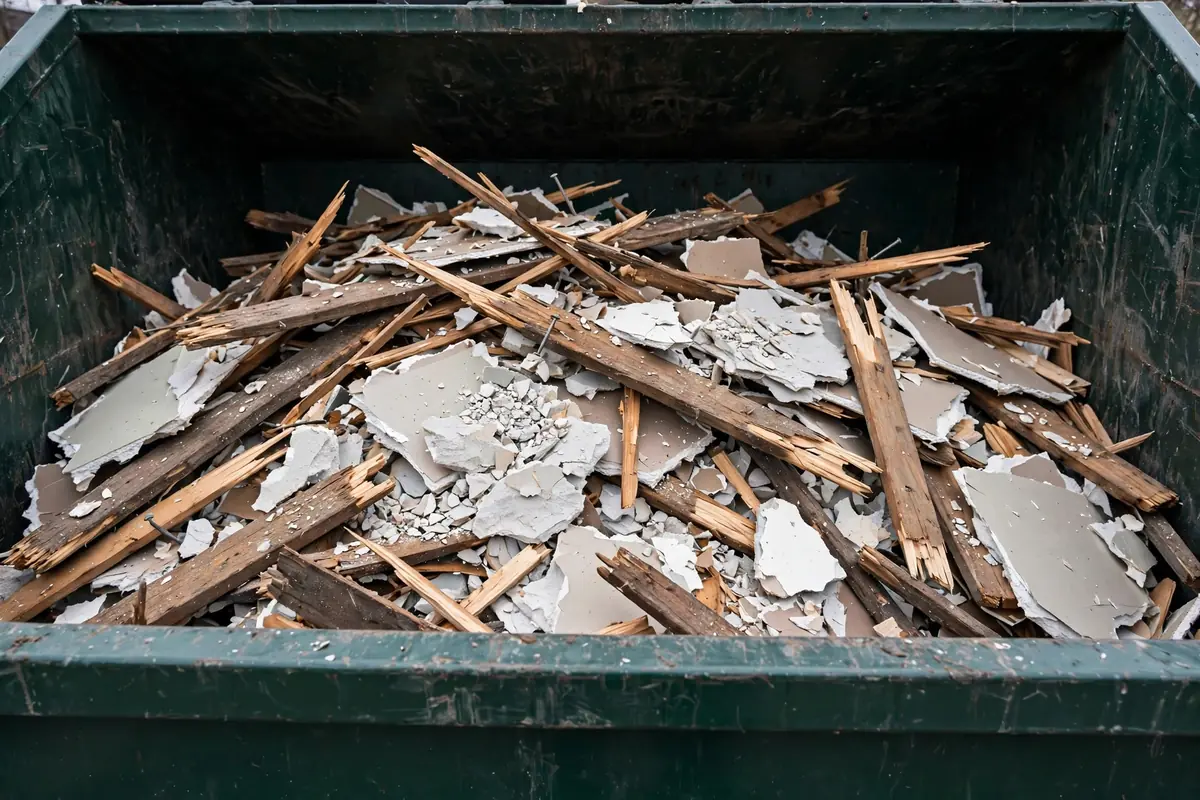
You can put most household debris, remodel waste, and yard waste in a dumpster: furniture, drywall, wood, flooring, roofing, boxes, and general clutter are usually allowed. You cannot put hazardous items in a dumpster, including wet paint, chemicals, solvents, asbestos, tires, batteries, and large appliances with refrigerants. The rules vary a little by provider and by local disposal site, so check the list in your quote before you load. A prohibited item in a dumpster can lead to a fee, a refused pickup, or a charge to remove the item.
Knowing what goes in and what stays out saves you time, money, and a headache on pickup day. The general rule is simple: if it is solid, non-hazardous, and not a liquid, it usually goes in. If it is a liquid, a chemical, a battery, or something that needs special handling, it usually stays out. This guide lists the allowed items, the prohibited items, and the items that need a little extra care, so you can load with confidence.
What Can You Put in a Dumpster?
Most of what comes out of a home cleanout or a remodel is allowed. The list below covers the items providers usually accept without question, as long as the load stays within the weight allowance and level with the rim.
| Category | Usually allowed |
|---|---|
| Household items | Furniture, mattresses, clothing, toys, books, boxes |
| Remodel waste | Drywall, wood, flooring, tile, cabinets, countertops |
| Roofing | Shingles, underlayment, flashing |
| Yard waste | Branches, brush, leaves, grass, small trees |
| General debris | Carpet, padding, insulation, siding, windows |
| Concrete and dirt | Concrete, brick, stone, soil (check weight limit) |
Furniture is one of the most common dumpster items, and it is usually allowed in any size. A 20-yard dumpster fits a two-car garage cleanout with furniture, boxes, and general clutter, and a 30-yard dumpster fits a whole-home cleanout. Break down large pieces where you can — a sofa with the legs removed, a dresser with the drawers out, a table with the top off — so the pieces stack flat and the dumpster holds more.
What Can You Not Put in a Dumpster?
Prohibited items are the ones that can harm the environment, damage the disposal site, or break the law if they are buried in a landfill. The list is similar for most providers, but the exact rules vary by local disposal site, so confirm the list with your provider before you load.
- Wet paint and solvents. Liquid paint, thinners, and solvents can leak and contaminate soil and water. Dried latex paint is often allowed once it is fully solid.
- Chemicals and cleaners. Pesticides, herbicides, pool chemicals, and strong cleaners need a household hazardous waste drop-off.
- Asbestos. Any material that may contain asbestos, such as old floor tiles or pipe insulation, needs special handling and must never go in a dumpster.
- Tires. Tires are handled separately by landfills, and most providers will not take them. A tire retailer or a recycling drop-off usually takes old tires.
- Batteries. Car batteries and rechargeable batteries contain chemicals and metals that need recycling. Many auto shops and retailers take them for free.
- Electronics. Televisions, computers, and monitors are often restricted, because they contain metals and glass that need separate recycling.
- Liquids of any kind. Oil, fuel, and other liquids can leak from the dumpster and are prohibited in almost every area.
- Medical waste. Needles, medicines, and medical items need a medical waste service, not a dumpster.
Note: If you are unsure about an item, ask the provider before you load it. A quick call is free, and a prohibited item found at the disposal site can lead to a fee or a refused load.
Can You Put Appliances in a Dumpster?
Small appliances such as microwaves, toasters, and fans are often allowed. Large appliances are more complicated. A fridge, a freezer, or an air conditioner contains refrigerant, and most providers will not take it unless the refrigerant has been removed by a qualified technician. A washer or a dryer without refrigerant is usually allowed, though some providers prefer that large appliances go to a scrap metal recycler instead.
Before you load a large appliance, call the provider and ask. Tell them the type of appliance and whether it still has refrigerant, and they will tell you whether it can go in the dumpster or whether a recycler is the better option. Many scrap yards will pick up a large appliance for free, because the metal has value, and that can save you dumpster space for other debris.
Can You Put Concrete and Dirt in a Dumpster?
Yes, in most cases, but the weight limit is the issue. Concrete, brick, stone, and soil are very heavy, and a small amount can fill the weight allowance. A 10-yard dumpster full of concrete can weigh 10 tons or more, far over a 1 to 2-ton allowance, and the overage fee would be large. Some providers offer a heavy-debris rental with a higher allowance, or ask that concrete and dirt be loaded only partway.
If your project involves concrete or dirt, tell the provider when you get the quote. A provider who knows the debris type can suggest the right size, the right allowance, and the right loading level. A load of clean concrete is often recyclable, and some areas have a concrete recycling site that charges less than a landfill, so ask the provider whether a separate load is worth it.
What About Yard Waste?
Yard waste such as branches, brush, leaves, and grass is usually allowed in a dumpster, and it is light for its size, so it rarely pushes the weight limit. Large tree trunks and stumps are the exception — they are heavy and bulky, and some providers limit their size or ask that they be cut into smaller pieces. A stump that is too large for the dumpster door may need to be cut down before it can be loaded.
For a large yard cleanup, a 20-yard dumpster usually fits the branches, brush, and leaves from a standard yard. For a very large cleanup with many trees, a 30-yard dumpster gives more room. Load branches flat and stack them neatly, so the dumpster holds more and the load stays level with the rim.
Tip: Keep yard waste separate from household debris when you can. A clean load of yard waste is easier to dispose of, and some areas offer a lower disposal rate for a load that is only brush and leaves.
What Do You Do With Prohibited Items?
Most areas have a household hazardous waste drop-off for paint, chemicals, batteries, and electronics. The drop-off is usually run by the city or the county, and it is often free for residents. A tire retailer will usually take old tires, and an auto shop will usually take a car battery. A scrap yard will take metal appliances, and a donation center will take furniture and clothing that are still usable.
Set prohibited items aside as you load the dumpster, in a separate pile, so they do not end up in the load by mistake. A quick trip to the drop-off after the dumpster is picked up clears the pile, and you will not face a fee for a prohibited item found at the disposal site. Call (855) 645-2976 and we will match you with independent local providers in your area who can confirm the allowed list for your project and give you a free, no-obligation quote.
Once the debris list is clear, our roll-off dumpster rental service can match you with a provider for the right size.
Frequently Asked Questions
Can you put furniture in a dumpster?
Yes. Sofas, chairs, tables, dressers, and mattresses are usually allowed in a dumpster. Break down large pieces where you can, so they take up less space and the dumpster holds more.
Can you put paint in a dumpster?
No. Wet paint is usually prohibited, because it is a liquid and can leak. Dried latex paint is often allowed once it is fully solid. Check with your provider and your local waste rules before you load any paint.
Can you put tires in a dumpster?
No. Tires are usually prohibited in dumpsters, because landfills handle them separately. Most areas have a tire recycling drop-off or a retailer that takes old tires.
Can you put appliances in a dumpster?
Small appliances are often allowed, but large appliances with refrigerants, such as fridges and air conditioners, are usually not allowed unless the refrigerant has been removed. Ask your provider before you load a large appliance.