
Dumpster and Porta Potty Quotes Blog
Roll-Off Dumpster Guide
Reviewed 8 November 2026
How a roll-off dumpster works, how it is delivered and picked up, and how it differs from other containers.
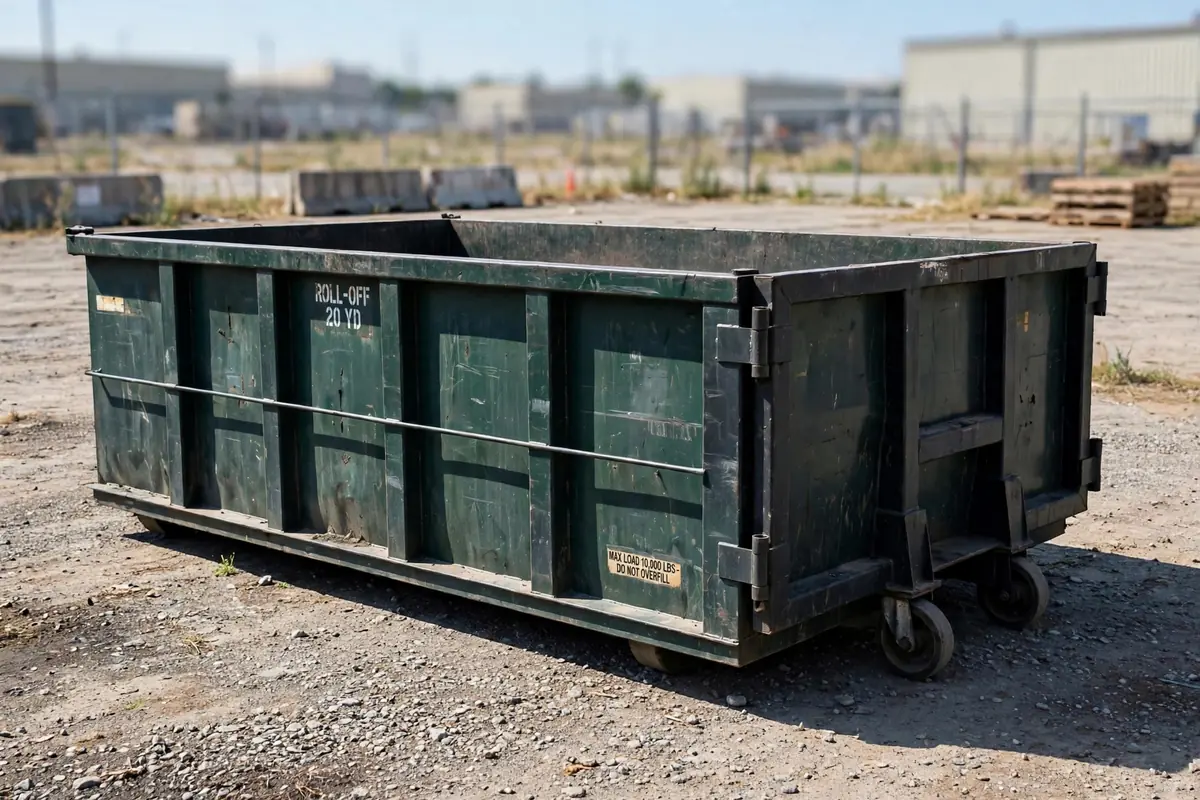
A roll-off dumpster is a large, open-top container that is delivered on a truck, rolled off onto the ground, and picked up when it is full. It is used for cleanouts, remodels, roofing, and construction debris, and it comes in sizes from 10 to 40 cubic yards. The name comes from the delivery: the container rolls off the back of the truck and onto the ground, where it sits for the rental period. When the rental ends, the truck returns, pulls the container back on, and takes it to a disposal site.
If you have ever seen a large steel container sitting in a driveway during a remodel, you have seen a roll-off dumpster. It is the standard container for a project that produces more debris than a curbside bin can hold, and it is rented for a short period — usually 7 to 14 days — rather than kept for regular service. This guide explains how it works, how it is delivered, what sizes exist, and how it differs from the lidded dumpster behind a store or an apartment building.
How Does a Roll-Off Dumpster Work?
A roll-off dumpster is a rectangular steel container with an open top and a door at one end. The open top lets you toss debris in from above, and the door lets you walk bulky items in from the back, which is easier for heavy pieces such as furniture, cabinets, and appliances. The container sits on the ground for the rental period, and you load it at your own pace.
The container has wheels or rails on the bottom, which let it roll off the truck bed and onto the ground. The truck has a hydraulic bed that tilts, and a cable or a hook that controls the container as it rolls. The driver places the container in the agreed spot, usually a driveway, and makes sure it sits level. When the rental ends, the driver reverses the process, pulling the container back onto the truck bed and driving it away.
How Is a Roll-Off Dumpster Delivered?
Delivery is a short process, and it takes only a few minutes once the truck arrives. The driver needs a clear, flat area with enough room for the truck and the container. A standard driveway works well for a 10 or 20-yard dumpster, and a longer driveway or a flat yard works for a 30 or 40-yard dumpster. The driver will ask you to move cars, keep gates open, and mark the spot where the container should go.
- Clear the spot. Move cars, bins, and any items that block the driveway or the placement area.
- Mark the spot. A cone or a flag shows the driver exactly where the container should sit.
- Protect the surface. Ask the provider about boards or plywood under the container, which can protect a driveway from scratches or marks.
- Check the overhead space. The truck needs clear space above the driveway, free of low branches and wires, to tilt the bed.
- Be reachable. Be on site or reachable by phone, in case the driver has a question about the spot.
On delivery day, the driver tilts the truck bed, and the container rolls off onto the ground. The driver checks that the container sits level and that the door opens and closes. You do not need to do anything to the container, and you do not need to supply power or water. The container is ready to load as soon as the truck leaves.
What Sizes Do Roll-Off Dumpsters Come In?
Roll-off dumpsters come in four common sizes: 10, 20, 30, and 40 cubic yards. A cubic yard is a volume measure, and the size tells you how much debris the container holds. A 10-yard dumpster holds about three pickup truck loads, a 20-yard dumpster holds about six, a 30-yard dumpster holds about nine, and a 40-yard dumpster holds about twelve.
| Size | Usual dimensions | Typical price | Best for |
|---|---|---|---|
| 10-yard | 12 ft x 8 ft x 3.5 ft | $300–$500 | Small cleanout |
| 20-yard | 22 ft x 8 ft x 4.5 ft | $350–$650 | Mid-size remodel |
| 30-yard | 22 ft x 8 ft x 6 ft | $450–$750 | Large remodel |
| 40-yard | 22 ft x 8 ft x 8 ft | $550–$900 | Major construction |
Prices are typical ranges and vary by location and weight. The 20, 30, and 40-yard containers are all about 22 feet long and 8 feet wide, and the difference is the height. A taller container holds more, but it is more difficult to load by hand, so a lower container is often easier to use for a home project.
Tip: If you will load by hand, choose a lower dumpster. A 20-yard container at 4.5 feet tall is far easier to load than a 40-yard container at 8 feet tall, even though the larger one holds more.
How Is a Roll-Off Dumpster Different From a Front-Load Dumpster?
A front-load dumpster is the lidded container you see behind a store, a restaurant, or an apartment building. It stays in place for months or years, and a truck empties it on a regular schedule by lifting it over the cab and tipping it. A roll-off dumpster is an open-top container that is placed on the ground for a short rental, and it is picked up whole when it is full.
The difference comes down to use. A front-load dumpster is for ongoing waste, collected on a schedule. A roll-off dumpster is for a project, rented for a week or two, and removed when the project is done. If you are cleaning out a home, remodeling a kitchen, or tearing off a roof, you need a roll-off dumpster. If you run a business that produces waste every week, you need a front-load dumpster with regular service.
What Can You Put in a Roll-Off Dumpster?
Most household debris, remodel waste, and yard waste can go in a roll-off dumpster: furniture, drywall, wood, flooring, roofing, boxes, and general clutter are usually allowed. Heavy debris such as concrete, brick, and dirt is usually allowed too, but it fills the weight allowance fast, so tell the provider what you will throw away. Hazardous items such as wet paint, chemicals, tires, batteries, and asbestos are usually prohibited, and large appliances with refrigerants need special handling.
Check the allowed list in your quote before you load, and ask the provider about any item you are unsure of. A prohibited item found at the disposal site can lead to a fee or a refused load, and a quick call before you load it avoids that. The weight allowance matters as much as the allowed list: a load that is over the allowance costs extra per ton, usually $50 to $100 per ton.
Note: Never fill a roll-off dumpster above the rim. Debris piled above the top edge cannot be covered for the road, and the driver may refuse pickup until the load is leveled.
How Do You Rent a Roll-Off Dumpster?
Renting a roll-off dumpster takes a few minutes. The provider will ask for your address, the size you need, the type of debris, the delivery date, and where the container should go. Have those answers ready and the quote will be accurate. When the quote arrives, check the size, the rental length, the weight allowance, and the total price, and ask the provider to confirm what is included.
As a nationwide quote-matching service, we connect you with independent local providers and help you compare their quotes side by side. Tell us what you are clearing out, and we will match you with providers in your area who can place a roll-off dumpster for your job. Call (855) 645-2976 for a free, no-obligation quote — prices vary by location, so a quote for your address is the only price that counts.
Now that you know how a roll-off works, get dumpster rental quotes for the size your job needs.
Frequently Asked Questions
What is a roll-off dumpster?
A roll-off dumpster is a large, open-top container that is delivered on a truck, rolled off onto the ground, and picked up when it is full. It is used for cleanouts, remodels, and construction debris, and it comes in sizes from 10 to 40 cubic yards.
How is a roll-off dumpster delivered?
The dumpster rides on a truck with a hydraulic bed. The driver tilts the bed, and the dumpster rolls off onto the ground in the agreed spot. The truck needs a clear, flat area and enough room to tilt the bed and roll the container off.
What is the difference between a roll-off and a front-load dumpster?
A roll-off dumpster is an open-top container placed on the ground for a short rental, and it is picked up when full. A front-load dumpster is a lidded container that stays in place for regular service, and a truck empties it on a schedule. Roll-off dumpsters are for projects, and front-load dumpsters are for ongoing waste.
How much does a roll-off dumpster cost?
A roll-off dumpster typically costs $300 to $900 for a rental period of 7 to 14 days, depending on the size. A 10-yard dumpster usually runs $300 to $500, and a 40-yard dumpster usually runs $550 to $900. Prices vary by location and weight.