
Dumpster and Porta Potty Quotes Blog
Dumpster Sizes Compared: 10 vs 20 vs 30 vs 40 Yard
Reviewed 8 November 2026
All four sizes side by side — dimensions, capacity, cost, and the weight allowance for each one.
If you would rather start from your project than from the sizes, see what size dumpster do I need for a cleanout, remodel, or construction job.
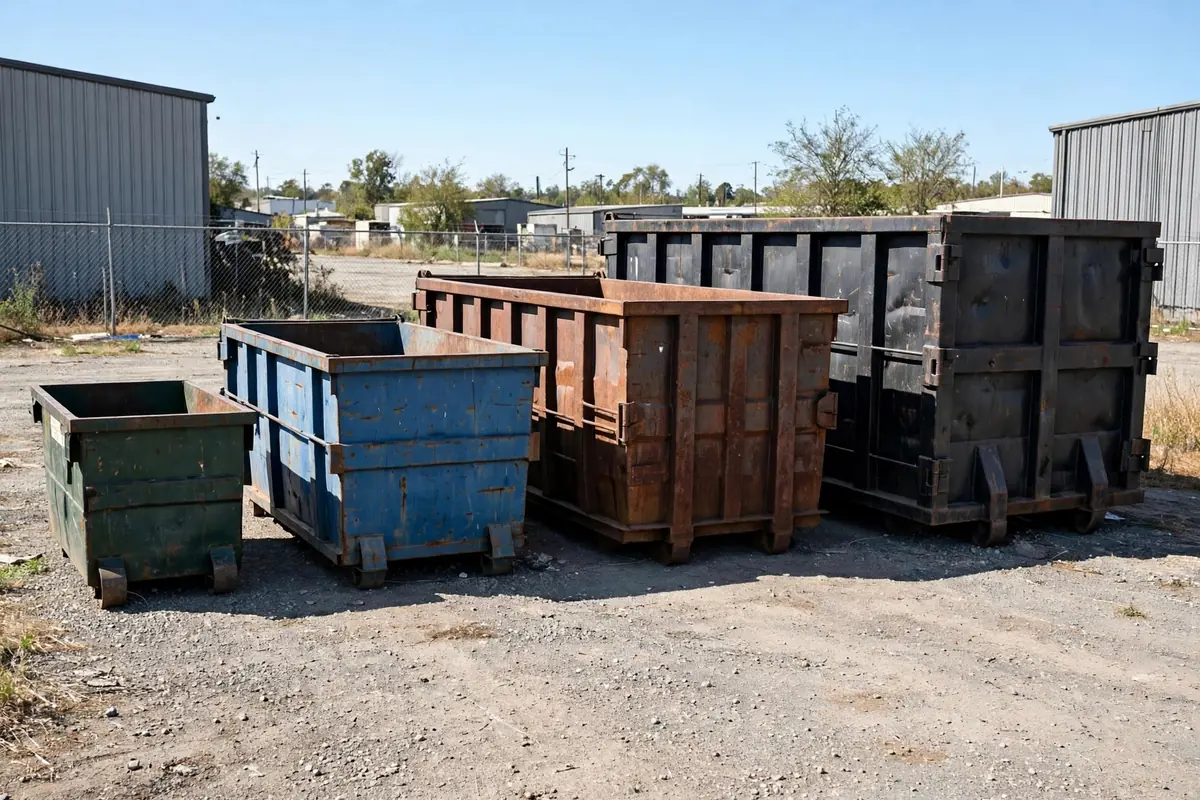
The four roll-off dumpster sizes are 10, 20, 30, and 40 cubic yards, and the 20-yard size is the most common choice for home projects. Each step up adds 10 cubic yards, about three more pickup truck loads, and the price gap between sizes is modest — usually $50 to $150 — while a second rental costs $300 or more, so choosing the larger size when you are unsure is usually the better call.
Dumpster sizes are measured in cubic yards, which is a volume measure. The number tells you how much debris the container holds, but the footprint, the height, the weight allowance, and the ease of loading all change with the size as well. This guide puts all four sizes side by side on the numbers, so you can see the trade-offs clearly and pick the size that fits your driveway, your debris, and your budget. If you would rather start from your project than from the sizes, see what size dumpster do I need for a cleanout, remodel, or construction job.
The Four Sizes at a Glance
The table below is the quick answer. It shows the usual dimensions, the capacity in pickup truck loads, the typical price, and the weight allowance for each size. Dimensions vary a little by provider, because different manufacturers build containers to slightly different shapes, but the capacity in cubic yards is the number that counts.
| Size | Usual dimensions | Capacity | Typical price | Weight allowance |
|---|---|---|---|---|
| 10-yard | 12 ft x 8 ft x 3.5 ft | About 3 pickup loads | $300–$500 | 1–2 tons |
| 20-yard | 22 ft x 8 ft x 4.5 ft | About 6 pickup loads | $350–$650 | 2–3 tons |
| 30-yard | 22 ft x 8 ft x 6 ft | About 9 pickup loads | $450–$750 | 3–4 tons |
| 40-yard | 22 ft x 8 ft x 8 ft | About 12 pickup loads | $550–$900 | 4–5 tons |
Prices are typical ranges and vary by location, debris type, and weight. The 20, 30, and 40-yard containers share a similar footprint — about 22 feet long and 8 feet wide — and the difference is the height. A 10-yard container is shorter, at about 12 feet long, so it fits a short driveway where a longer container would not.
10-Yard Dumpster: Dimensions and Capacity
A 10-yard dumpster measures about 12 feet long, 8 feet wide, and 3.5 feet tall, and it holds 10 cubic yards of debris, about three pickup truck loads. The weight allowance is 1 to 2 tons, which fits light household debris well. For heavy debris such as concrete or dirt, a 10-yard container fills the weight allowance fast, so tell the provider what you will throw away and ask whether the allowance fits.
At only about 3.5 feet tall, a 10-yard container is the easiest size to load, because most people can toss debris over the side without a struggle. Its 12-foot length is the shortest of the four sizes, so it fits a short driveway where a 22-foot container would block the pavement or the street. The price is usually $300 to $500, and prices vary by location.
20-Yard Dumpster: Dimensions and Capacity
A 20-yard dumpster measures about 22 feet long, 8 feet wide, and 4.5 feet tall, and it holds 20 cubic yards of debris, about six pickup truck loads. The weight allowance is 2 to 3 tons, which fits most household and remodel debris. The price is usually $350 to $650, and prices vary by location.
A 20-yard container is about 4.5 feet tall, so it is still easy to load by hand, and its 22-foot length fits a standard driveway. It holds twice the volume of a 10-yard container for a price gap of usually $50 to $150, which is why it is the most common size. If you are unsure of the size, the 20-yard is the safe starting point on the numbers alone.
30-Yard Dumpster: Dimensions and Capacity
A 30-yard dumpster measures about 22 feet long, 8 feet wide, and 6 feet tall, and it holds 30 cubic yards of debris, about nine pickup truck loads. The weight allowance is 3 to 4 tons, which fits heavier loads than a 20-yard container. The price is usually $450 to $750, and prices vary by location.
A 30-yard container is about 6 feet tall, so loading by hand takes more effort than a 20-yard container, but the rear door helps — you can walk bulky items in through the door instead of lifting them over the side. It holds 50 percent more than a 20-yard container, 30 cubic yards instead of 20, for a price gap of usually $100 to $150.
40-Yard Dumpster: Dimensions and Capacity
A 40-yard dumpster measures about 22 feet long, 8 feet wide, and 8 feet tall, and it holds 40 cubic yards of debris, about twelve pickup truck loads. The weight allowance is 4 to 5 tons, the largest of the four sizes. The price is usually $550 to $900, and prices vary by location.
A 40-yard container is about 8 feet tall, which makes hand-loading difficult, so it is best for debris that can be carried in by a wheelbarrow, a dolly, or a machine, or for debris that is tossed in from a height. It holds twice the volume of a 20-yard container, but it takes up the same footprint — about 22 feet by 8 feet — and the extra volume comes entirely from height. For most home jobs, a 40-yard container is more than the numbers call for.
Footprint, Height, and Loading
The footprint changes once across the four sizes, and the height changes at every step. The 10-yard container is about 12 feet long and 8 feet wide. The 20, 30, and 40-yard containers are all about 22 feet long and 8 feet wide, so the ground they cover is the same, and the difference between them is height alone: about 4.5 feet, 6 feet, and 8 feet.
Height decides how the container loads. A 10-yard container at 3.5 feet and a 20-yard container at 4.5 feet can be loaded over the side by hand. A 30-yard container at 6 feet is easier through its rear door, and a 40-yard container at 8 feet is best loaded with a wheelbarrow, a dolly, or a machine. A taller container is not always better: a load piled above the rim cannot be picked up, so match the height to how the debris will go in.
Tip: Break down bulky items before you load them. A cabinet, a door, or a piece of furniture takes up far less space when it is taken apart, and a container that is loaded well can hold much more than one filled with whole items.
Weight Allowance by Size
Every dumpster quote includes a weight allowance, and the allowance grows with the size: 1 to 2 tons on a 10-yard container, 2 to 3 tons on a 20-yard, 3 to 4 tons on a 30-yard, and 4 to 5 tons on a 40-yard. The allowance matters most for heavy debris. A 10-yard container full of household items may weigh only a ton or two, well within the allowance. A 10-yard container full of concrete can weigh 10 tons or more, far over the allowance, and the overage fee would be large.
If your debris is heavy, tell the provider before you book. Some providers offer a heavy-debris container with a higher weight allowance, or a smaller container that is filled only partway with concrete or dirt. A provider who knows the debris type can confirm the size, the allowance, and the per-ton overage rate in advance.
Cost by Size
The typical price rises with the size: $300 to $500 for a 10-yard container, $350 to $650 for a 20-yard, $450 to $750 for a 30-yard, and $550 to $900 for a 40-yard. The gap between one size and the next is usually $50 to $150, while a second rental costs $300 or more, so the larger size is usually the better value when the volume is uncertain. Prices vary by location, debris type, and weight, and the quote for your address is the only price that counts.
As a nationwide quote-matching service, we connect you with independent local providers who can help you compare sizes for your job. Describe the debris and the rental length, and we will match you with providers in your area for a free, no-obligation quote across the sizes. Call (855) 645-2976 — prices vary by location, so a quote for your address is the only price that counts.
Compare the sizes above, then get dumpster rental quotes for the size that fits your debris.
Frequently Asked Questions
What is the most common dumpster size?
The 20-yard dumpster is the most common size, because it measures about 22 feet by 8 feet by 4.5 feet and holds 20 cubic yards, about six pickup truck loads, while still fitting in a standard driveway. It typically costs $350 to $650, and prices vary by location.
How much bigger is a 30-yard dumpster than a 20-yard dumpster?
A 30-yard dumpster holds 50 percent more than a 20-yard dumpster — 30 cubic yards instead of 20, or about nine pickup truck loads instead of six. The footprint is similar, and the 30-yard container is taller, at about 6 feet instead of 4.5 feet.
Can a 40-yard dumpster fit in a driveway?
A 40-yard dumpster is about 22 feet long and 8 feet wide, so it fits in a long driveway with room to spare. It is about 8 feet tall, which makes it more difficult to load by hand, so it is best for debris that can be carried in by a wheelbarrow or a machine.
What is the weight allowance on a 20-yard dumpster?
A 20-yard dumpster usually carries a weight allowance of 2 to 3 tons. Heavy debris such as roofing, concrete, and dirt fills the allowance fast, so tell the provider what you will throw away and ask about the per-ton overage rate before you book.
Is a bigger dumpster always better?
Not always. A bigger dumpster costs more, takes up more room, and can be more difficult to load by hand. A bigger dumpster is the better choice when the volume is large or when a smaller dumpster would need a second rental.