
Dumpster and Porta Potty Quotes Blog
What Size Dumpster Do I Need?
Reviewed 8 November 2026
Match your project to the right size the first time — no second rental, no wasted space.
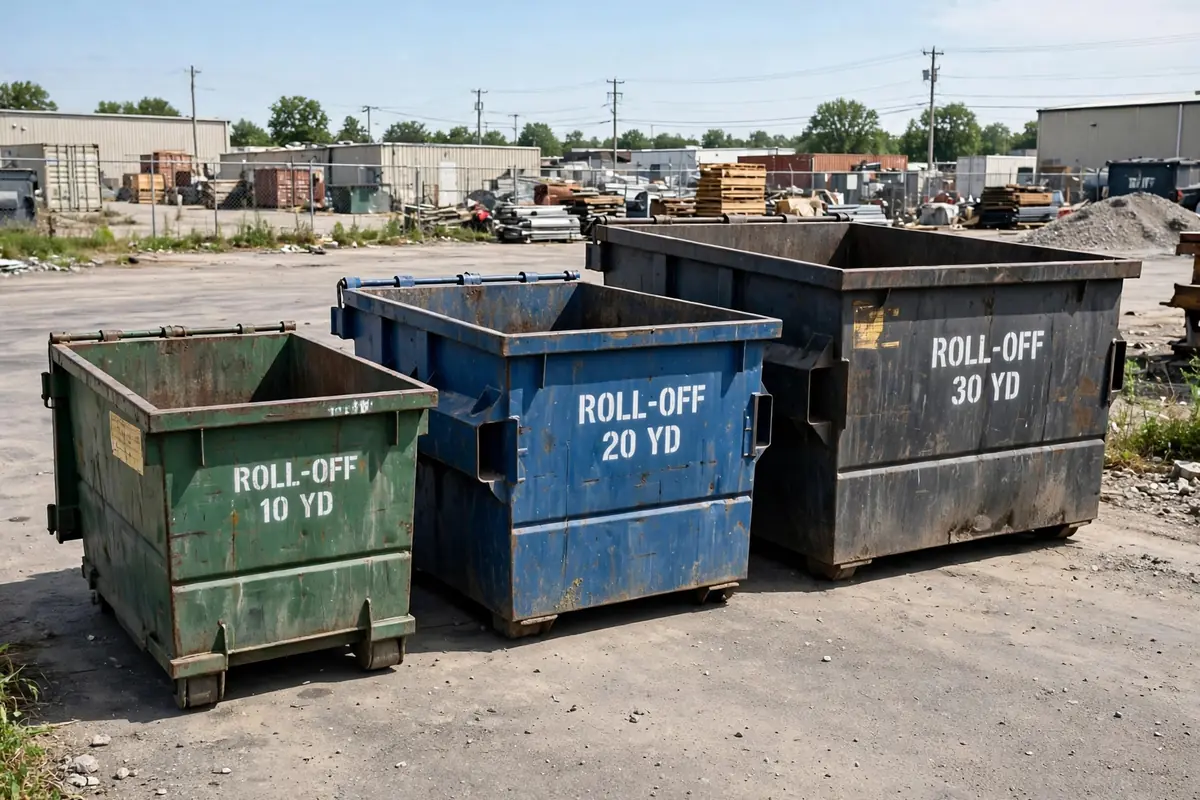
Start with the job, not the container. Walk through the rooms you are clearing or the work you are doing, make a list of the big items, and let that list pick the size. A garage full of boxes and a kitchen full of cabinets are two different jobs, and they need two different containers, even when the rooms are the same size. This guide walks through the jobs people actually book, so you can match yours to a size the first time and skip the second rental.
The four sizes are 10, 20, 30, and 40-yard, and the usual starting point for a home job is the 20-yard. A 10-yard container suits a small cleanout or a single-room job. A 30-yard container suits a whole-home cleanout or a large remodel. A 40-yard container suits major construction. Prices are typical ranges and vary by location: a 10-yard container typically costs $300–$500, a 20-yard $350–$650, a 30-yard $450–$750, and a 40-yard $550–$900. If you want the numbers side by side instead of the stories, see dumpster sizes compared: 10 vs 20 vs 30 vs 40 yard.
Start With the Project, Not the Container
Before you book, walk the job and write down what is actually leaving the house. Count the big items first: sofas, mattresses, dressers, wardrobes, appliances, and boxes. A mattress takes up a lot of room, and a sofa takes up even more. A room that looks empty can still fill a container once the furniture comes out, and a garage that looks full of boxes may hold less than you think once the boxes are broken down and stacked.
Then think about what the debris is made of, not just how much of it there is. Boxes, clothes, and old furniture are light and bulky. Tile, plaster, brick, and roofing are dense and heavy, and a container full of them behaves very differently from a container full of household items. Tell the provider what you are throwing away when you call, and describe the rooms involved, so the quote matches the job and not just the size name.
The Garage Cleanout
The garage cleanout is the most common reason people rent a dumpster, and the size depends on how much of the garage is going. A single-car garage with boxes, old paint cans, a broken bike, and a few pieces of small furniture usually fits in a 10-yard dumpster, which typically costs $300–$500. It is a small job, and a small container keeps the price down and leaves the driveway usable.
- Single-car garage: 10-yard dumpster. Boxes, small furniture, and general household items fit easily.
- Two-car garage: 20-yard dumpster. Bulky furniture, a workbench, and old appliances need the extra room.
- Garage plus basement: 20 or 30-yard dumpster. Two spaces worth of clutter adds up fast.
Walk through the garage before you book and make a rough list of the big items. If the list includes a fridge, a washing machine, or a chest freezer, say so when you call, because old appliances change what the provider needs to know. If the list is long, go up a size. A container that is too small means a second rental, a second delivery fee, and a second disposal fee.
The Kitchen Remodel
A kitchen remodel produces cabinets, countertops, flooring, drywall, and an old sink or two, and the size depends on the scope of the work. A small kitchen or a single bathroom remodel, with a tub, a vanity, tile, and drywall, usually fits in a 10-yard dumpster. A full kitchen remodel, with cabinets, countertops, flooring, and drywall, usually needs a 20-yard dumpster, which typically costs $350–$650.
A remodel that covers several rooms, or a kitchen remodel that includes a room addition, usually needs a 30-yard dumpster, which typically costs $450–$750. The debris from a remodel is mixed and awkward: long boards, cabinet boxes, and sheets of drywall that do not stack neatly. Break down the cabinets and doors before you load them, and the same container will hold far more than one filled with whole items.
The Roof Tear-Off
A roof tear-off is a job where the debris type matters as much as the amount. Shingles are heavy, and a roof that looks like a small job from the ground can produce a surprising pile once the layers come off. A tear-off for a single-story home with one layer of shingles usually fits in a 20-yard dumpster. A two-story home, a large roof, or a roof with two layers of shingles usually needs a 30-yard dumpster.
Tell the provider the size of the roof and how many layers are coming off when you call. A tear-off crew works fast, and the container needs to be in place before the first shingle comes off, close enough to the house that the crew can carry debris to it without a long walk. If the roof is steep or the crew is large, the container will fill faster than you expect, so go up a size rather than risk a swap in the middle of the job.
Note: Heavy debris such as concrete, brick, dirt, and roofing fills a container's limits long before it looks full. Tell the provider what you will throw away, and ask whether the size you picked fits your debris type.
The Estate Cleanout
An estate cleanout is the job people underestimate most. A whole home with furniture in every room, a full attic, and a basement that has not been cleared in years produces far more debris than a single cleanout, and the items are bulky: beds, wardrobes, dining tables, and boxes of belongings that have been stored for decades. A 30-yard dumpster is the usual choice, and it typically costs $450–$750.
For a very large home, or a cleanout where the rooms are packed floor to ceiling, a 40-yard dumpster is the safer call, typically $550–$900. Estate cleanouts also run on emotion as much as on logistics, and the work often takes longer than the family expects. Book the container for the full time you think you will need, and tell the provider if the dates might move, so the pickup can shift with the work.
The Construction Job
Construction debris is bulky and mixed: lumber, drywall, flooring, packaging, and offcuts. A small construction job, such as a deck replacement or a fence removal, usually fits in a 10 or 20-yard dumpster. A new home build or a major renovation usually needs a 30-yard dumpster, and a large commercial job usually needs a 40-yard dumpster, or several containers on rotation.
For construction, a 30-yard dumpster is a common choice, because it holds a lot of bulky material without being too tall to load by hand. A 40-yard dumpster holds more, but its height makes hand-loading difficult, and it is best for debris that can be carried in by a wheelbarrow or a machine. If the crew will load by hand, a 20 or 30-yard dumpster is easier to work with than a 40-yard one.
Tip: Break down bulky items before you load them. A cabinet, a door, or a piece of furniture takes up far less space when it is taken apart, and a container that is loaded well can hold much more than one that is filled with whole items.
The Yard, the Driveway, and the Neighbours
Where the container sits matters as much as how big it is. A container needs a firm, level spot with room for the delivery truck to set it down and to return for pickup, and with no low branches or wires overhead. A driveway is the usual spot, and a short driveway may only fit a smaller container, so measure the spot before you book and tell the provider the space you have.
If the container must sit on the street, check whether your town needs a permit, since a street placement may need one while a driveway usually does not. Keep the path from the house to the container clear, and keep the container clear of the pavement edge so neighbours and passers-by can get past. A provider can confirm which sizes fit your driveway and which ones need a street placement.
When Two Sizes Both Seem Right
If you are torn between two sizes, choose the larger one. The price gap between a 10-yard and a 20-yard container is usually $50 to $100, while a second rental costs $300 or more. The larger container also gives you room for the items you forgot about — the old rug, the broken chair, the boxes in the attic — without a second trip.
The only reason to choose the smaller size is space. If your driveway is short, or the container must fit in a tight spot, a 10-yard container may be the only size that fits. Measure the spot before you book, and tell the provider the space you have. A provider can confirm which sizes fit your driveway and which ones need a street placement.
What to Tell the Provider When You Call
Have the story of the job ready when you call: what rooms are involved, what the big items are, what the debris is made of, and when you need the container. A provider who hears the full story can suggest the right size, confirm the price, and tell you whether a different size is the better call. Describe the job and the debris, and we will match you with providers in your area for a free, no-obligation quote on the size that fits. Call (855) 645-2976 — prices vary by location, so a quote for your address is the only price that counts.
With the size picked, see our dumpster rental and porta potty rental quotes and call with your project details.
Frequently Asked Questions
What size dumpster do I need for a garage cleanout?
A 10-yard dumpster is usually enough for a single-car garage cleanout, and a 20-yard dumpster fits a two-car garage or a garage with bulky furniture. If the garage has heavy items such as old appliances, tell the provider when you call.
What size dumpster do I need for a kitchen remodel?
A 20-yard dumpster is the usual choice for a kitchen remodel, because it holds cabinets, countertops, flooring, and drywall without taking up too much driveway space. A large kitchen with an added room may need a 30-yard dumpster.
What size dumpster do I need for a roof tear-off?
A 20-yard dumpster usually fits a roof tear-off for a single-story home, and a 30-yard dumpster fits a larger or two-story roof. Roofing shingles are heavy, so tell the provider the size of the roof and how many layers are coming off.
Is it better to get a bigger dumpster than I need?
Usually, yes. A slightly larger dumpster costs only a little more than a smaller one, while a second rental costs as much as the first. If you are between two sizes, choose the larger one.